

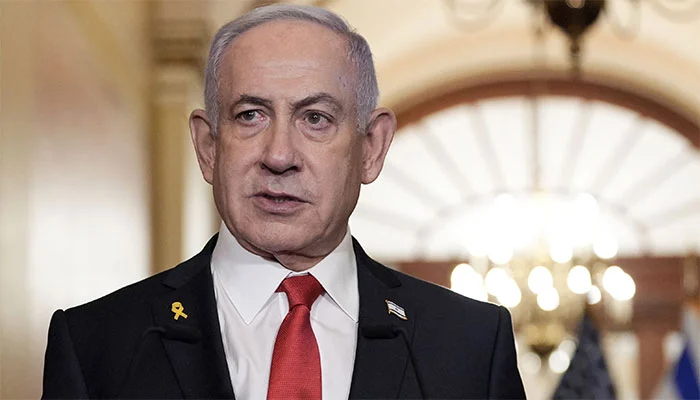
Ankara — Turkey has taken a major legal and diplomatic step by issuing arrest warrants for Israeli Prime Minister Benjamin Netanyahu and other high-ranking Israeli officials on severe charges of genocide and crimes against humanity in Palestine. This action is set to further increase international pressure for accountability on Israel.
According to the Turkish Prosecutor’s Office, warrants have been issued for Netanyahu and 36 other senior Israeli officials, including the Israeli Defence Minister, the National Security Minister, and the Israeli Army Chief.
Basis of the Investigation and Allegations:
- Turkish prosecutors accuse the Israeli officials of systematic genocide in Gaza and crimes against humanity.
- The investigation was initiated following a complaint filed by the Global Samoud Flotilla, a civilian humanitarian mission that was intercepted by the Israeli Navy while attempting to deliver aid to Gaza.
- Based on evidence collected, witness testimonies, and international law, prosecutors concluded that the Israeli military and political leadership are directly responsible for attacks on hospitals, aid convoys, and civilian infrastructure.
Key Incidents Highlighted:
The Turkish prosecutor’s statement cited several prominent incidents, including:
- The tragic death of 6-year-old Hind Rajab at the hands of Israeli soldiers.
- The attack on the Al-Ahli Arab Hospital, which resulted in the death of over 500 people.
- The attack on the Turkish-Palestinian Friendship Hospital.
The investigation also noted that Israel’s continued siege of Gaza and the deliberate obstruction of humanitarian aid to civilians constitute an additional war crime under international law.
Global Context:
Through this move, Turkey has expressed its determination to seek accountability for those responsible for war crimes in Gaza and to secure justice for the victims. It is noteworthy that the International Criminal Court (ICC) previously issued arrest warrants for Netanyahu last November on charges of war crimes, and Israel is currently defending a genocide case at the International Court of Justice (ICJ).
