

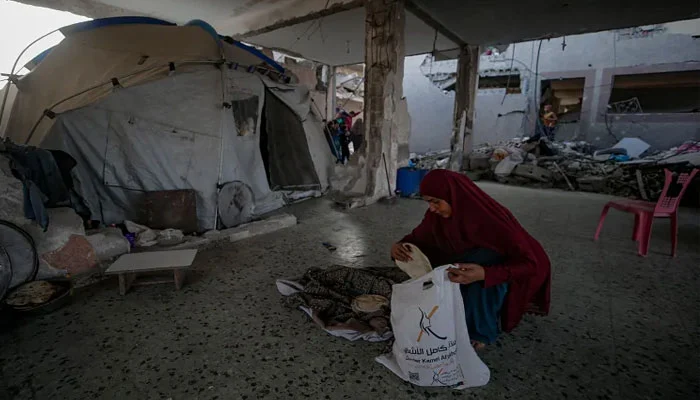
Millions of innocent Palestinians in the Gaza Strip are teetering on the brink of severe starvation and the onset of winter cold, while Israeli restrictions continue to pose a formidable challenge to United Nations efforts to deliver vital aid. The global body has issued a grave warning that time is rapidly running out to avert a larger humanitarian catastrophe.
Abeer Etefa, Senior Spokesperson for the World Food Programme (WFP), stated in a media briefing on Tuesday that while aid activities increased slightly following the ceasefire between Israel and Hamas last month, the quantity of assistance remains extremely limited due to the opening of only two border crossings.
Emphasizing the emotional urgency of the crisis, she pleaded: “We need full access to the people of Gaza; we need to accelerate the pace of aid delivery. This is a race against time. Winter is approaching, people are starving, and the needs are vast.”
Northern Gaza: The Shadow of Famine and Logistical Nightmare
The WFP reports that it has provided food assistance to over 1 million Palestinians since the ceasefire began (October 7, 2023). However, access to northern Gaza remains the biggest challenge. This region was confirmed to be facing famine conditions by the global hunger monitoring body in August.
Etefa explained that with the northern routes closed, aid convoys are forced to take a long and difficult route from the south. She stressed that to deliver aid at scale, opening all crossings, especially those in the north, is paramount, as is accessing main roads to ensure food reaches the needy as quickly as possible.
Breach of Agreement and Plight of the Displaced
Despite the ceasefire, thousands of Palestinians who returned to northern Gaza found their homes reduced to rubble. These displaced families are now being forced to endure the approaching winter in makeshift tents and shelters without adequate assistance.
According to the Gaza Government Media Office, only 3,203 commercial and aid trucks entered between October 10 and 31, an average of only 145 trucks per day. This figure represents merely 24% of the 600 trucks agreed upon, a deficit widely seen as a clear violation of the truce agreement.
Adding to the severe humanitarian distress, Israeli military assaults have continued. The Gaza Health Ministry confirmed that since the ceasefire, at least 240 Palestinians have been killed and 607 wounded.
