

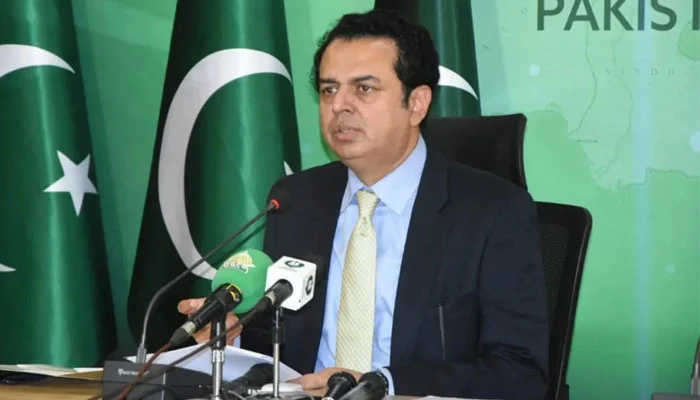
Minister of State for Interior, Senator Talal Chaudhry, has emphasized that the concept of any personal law, or a “Niazi Law,” cannot be accepted in Pakistan. He clarified that the government in Khyber Pakhtunkhwa must be run strictly according to the constitution and law.
Speaking to the media, Talal Chaudhry said that making government decisions based on consultation with a convicted person is not constitutionally correct. He warned that such an action would create a constitutional crisis in the country.
The federal minister also expressed concern over announcements that the provincial cabinet would be formed on the direction or advice of the PTI founder, who is currently in jail. He stated that these actions are against the constitution and past court judgments.
He said that the constitution does not allow a person who has been convicted by a court or is in prison to participate in governmental or administrative decisions. He recalled a past incident, stating that the Supreme Court had given a similar verdict during former Prime Minister Nawaz Sharif’s time, ruling that decisions made by a person in jail have no constitutional standing.
Talal Chaudhry added that PTI calling its founder’s decisions “party policy” is a violation of the party’s own constitution, as its structure only recognizes the position of “Chairman.”
He advised the provincial government of Khyber Pakhtunkwaw to make its decisions independently according to its own discretion. He questioned whether the province would be governed under the constitution or on the signals of a convicted person.
The minister stated that the law in the country is equal for everyone, and no single individual can be given a status above the constitution. He urged that constitutional privileges be respected and that the government structure should not be formed under pressure from any unrelated individual.
Talal Chaudhry assured that the Ministry of Interior and the federal government will continue to take all possible steps to ensure constitutional order and institutional stability.
