

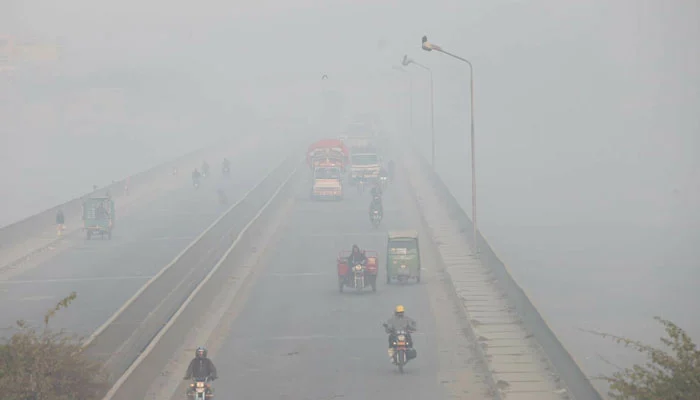
Pakistan’s most populous province, Punjab, is currently facing a severe environmental crisis. A dangerous wave of air pollution has enveloped the central parts of the province, including the metropolis of Lahore, turning the simple act of breathing into a significant health risk.
The severity of the situation was starkly illustrated on Sunday morning when the Air Quality Index (AQI) in Lahore’s Ravi Road area soared to an alarming 810. The city’s average AQI was recorded at 367, far beyond safe limits. Other major cities are also choking, with Gujranwala reporting an AQI of 627 and Faisalabad at 434. Health experts have issued strong advisories, urging citizens to wear masks when outdoors.
The Environmental Protection Department has identified two primary drivers for this intense smog: low-pressure air zones and transboundary pollution.
A spokesperson for the department explained that polluted air drifting from the Indian state of Punjab is a major contributor to the deteriorating air quality. This problem is severely compounded by high humidity levels, reaching 95% to 100% during the night and early morning, which traps pollutants near the ground. This blanket of smog has now spread across Lahore, Kasur, Sheikhupura, and Gujranwala.
In response, the authorities are taking mitigation steps. An awareness campaign is underway in rural areas to prevent the burning of crop residue, utilizing mosque announcements and direct engagement with farmers. Additionally, “smog guns” are being deployed in Lahore’s most affected zones.
Amidst the gloom, the Meteorological Department has offered a glimmer of hope, forecasting a potential decrease in the smog’s intensity within the next 48 hours, thanks to a slight expected increase in wind speed.
