

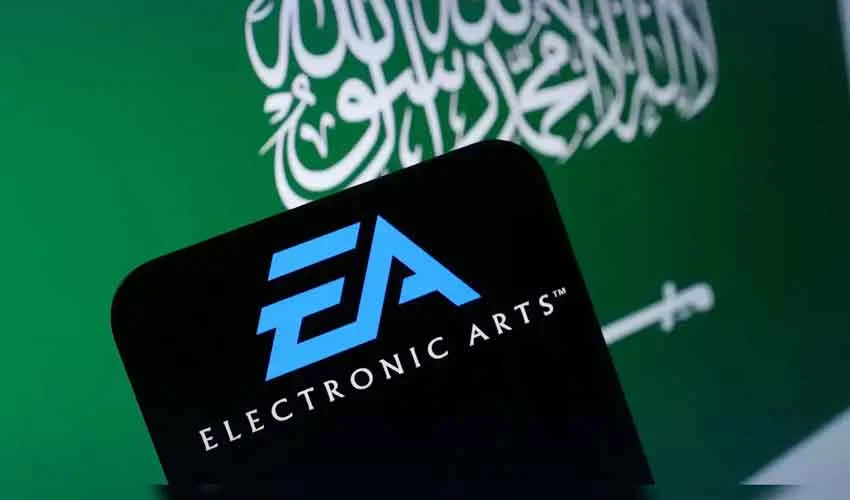
RIYADH, SAUDI ARABIA – The technology-focused buyout group Silver Lake has long coveted video game developer Electronic Arts (EA), the studio behind massive franchises like “Battlefield” and “Madden NFL.” This spring, a brainstorming session between Silver Lake investors and Jared Kushner, the son-in-law of President Donald Trump, began mapping out the plan that resulted in the world’s largest leveraged buyout. Sources familiar with the talks said the discussions began between Silver Lake co-CEO Egon Durban and Kushner.
The $55 billion deal, announced Monday and backed by Saudi Arabia’s Public Investment Fund (PIF), will significantly expand Silver Lake’s portfolio in games and entertainment while securing a trophy asset for the sovereign wealth fund.
PIF, which already owned nearly 10% of EA, will become the game developer’s majority shareholder, with Kushner’s private equity fund, Affinity Partners, taking a 5% stake. Kushner, a top White House aide during the Trump administration, founded Affinity in 2021 and has investments from funds in Saudi Arabia, Qatar, and the UAE. Sources noted his instrumental role in brokering the deal, which made sense given PIF’s existing gaming investments.
Saudi Vision 2030 and Soft Power
The deal aligns squarely with the ambitions of Saudi Crown Prince Mohammed bin Salman, who has laid out a national goal for the kingdom to become the “global hub for games and esports” by 2030.
Joost van Dreunen, a games professor at NYU’s Stern School of Business, framed the acquisition as more than just a financial transaction. “This isn’t just a spreadsheet deal. It’s Saudi Arabia buying time, talent, and cultural clout in one shot,” he said. “It puts a trophy IP house at the tip of the Saudi Vision 2030 spear, backed by a government that has earmarked $38 billion for games and sees interactive entertainment as both soft power and long-run monetization.”
PIF, via its Savvy Games Group, has made major outlays in video game publishers recently, including a stake in Activision Blizzard and holdings in Nintendo and Take-Two Interactive. Acquiring EA, with its well-known franchises and the potential to bring game-developing capabilities to the kingdom, convinced the fund to double down.
In Riyadh, Qiddiya, one of PIF’s infrastructure mega-projects, is branding itself as the ‘city of play’ and aims to attract 10 million visitors per year to its esports and gaming district by 2030.
Deal Structure and Market Reaction
The consortium is investing $36 billion in the EA buyout, supported by $20 billion in debt financed by JPMorgan. EA shareholders will receive $210 per share in cash, representing a 25% premium over the stock’s closing price before reports of the deal emerged.
Despite the premium, some analysts feel the price is too low, with Benchmark analysts noting that “The true earnings power of EA is only beginning to emerge.” While the merger agreement allows 45 days for a superior bid, this is considered unlikely to materialize.
The deal is expected to close by Q2 2026 and, despite its magnitude and Saudi involvement, analysts anticipate minimal regulatory resistance. David O’Hara of MKP advisors commented, “Given today’s broadly constructive Western-Saudi ties, the consortium is more likely to face ‘box-ticking’ reviews and a few raised eyebrows than outright resistance.”
