

WASHINGTON, DC – The United States has decided to provide Ukraine with critical intelligence to assist in striking Russia’s oil and power sites, marking a significant escalation in support aimed at crippling the Kremlin’s war financing. The move comes as Washington simultaneously weighs sending Kyiv weapons that could vastly expand its range of attack.
Citing US officials, The Wall Street Journal reported on Wednesday that this development will make it easier for Ukraine to target crucial energy infrastructure—refineries, pipelines, and power stations—with the specific goal of drying up Russia’s revenue and oil supply. This is the first reported instance of the United States directly assisting Ukraine with intelligence for long-range strikes deep into Russian territory against energy targets.
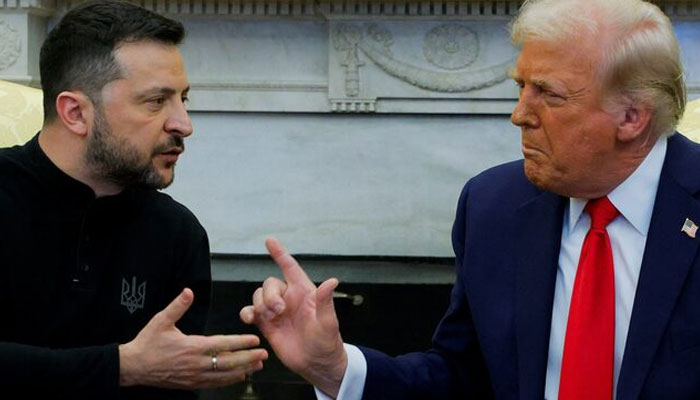
The approval for this heightened intelligence sharing came shortly before a striking rhetorical shift from US President Donald Trump, who suggested last week that Ukraine could retake all Russian-occupied land. “After seeing the Economic trouble (the war) is causing Russia, I think Ukraine, with the support of the European Union, is in a position to fight and WIN all of Ukraine back in its original form,” Trump wrote on Truth Social, shortly after meeting Ukrainian President Volodymyr Zelenskiy.
The push for energy strikes is rooted in the fact that oil and gas revenue remains the Kremlin’s single most important source of cash for financing its military operations, making it a central focus of Western sanctions. President Trump has been lobbying European and global partners to halt purchases of Russian oil, which he sees as crucial to imposing tough sanctions and depleting Moscow’s war chest.
In line with this strategy, the US is also considering a Ukrainian request for Tomahawk cruise missiles. With a range of 2,500 km (1,550 miles), these missiles could easily place Moscow and the majority of European Russia within striking distance if fired from Ukraine. Kyiv has also developed its own long-range missile, the Flamingo, though it remains in early production with unknown quantities.
The pressure campaign extends beyond Europe. Trump has taken steps to impose an additional tariff on imports from India to pressure New Delhi to cease its purchases of discounted Russian crude oil, and has similarly lobbied countries like Turkey.
Kremlin spokesman Dmitry Peskov dismissed external pressure last week, stating: “It is a sovereign state that decides for itself in which areas to cooperate with us. And if certain types of trade in certain goods are deemed advantageous to the Turkish side, then the Turkish side will continue to do so.”
Meanwhile, the Group of Seven (G7) nations’ finance ministers announced earlier on Wednesday that they would take joint steps to increase pressure on Russia by targeting those who are continuing to increase their purchases of Russian oil and those who are facilitating the circumvention of sanctions. Russia launched its full-scale invasion of Ukraine in February 2022, labeling it a “special military operation,” while Kyiv and its European allies condemn it as an imperial land grab.
