

ISLAMABAD, PAKISTAN
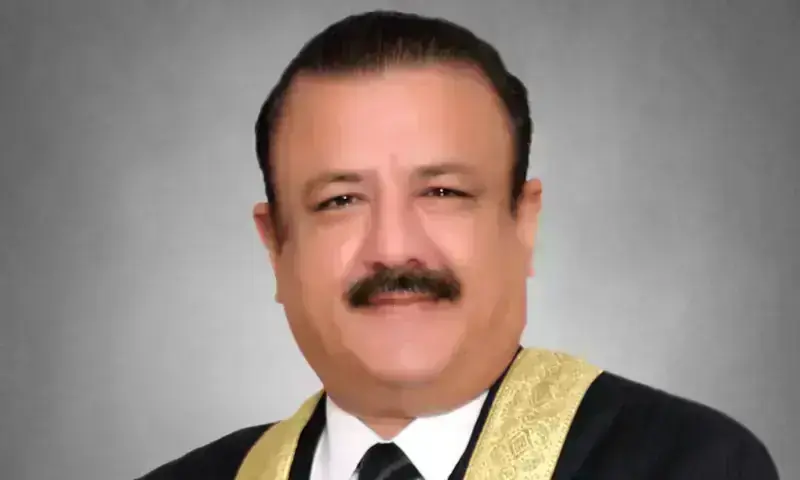
Justice Tariq Mehmood Jahangiri, a serving judge of the Islamabad High Court (IHC), has escalated his ongoing legal battle to the Supreme Court, challenging a recent Sindh High Court (SHC) ruling concerning the validity of his law degree. Justice Jahangiri is seeking to have the verdict declared “null and void,” marking a significant development in a controversy that has cast a shadow over judicial integrity.
In his petition, a copy of which was obtained by Dawn.com, Justice Jahangiri contends that the SHC “dismissed my application to become a party to the case,” arguing that passing a “one-sided order without hearing the affected party is contrary to law.”
The legal saga revolves around a controversial degree issued by Karachi University (KU), the validity of which has been the subject of an intense public and institutional dispute.
The Challenge to Judicial Restraint
The current petition is the latest move in a series of legal actions. On September 16, a two-judge IHC bench had issued an interim order restraining Justice Jahangiri from exercising his judicial powers while hearing a writ petition filed under Article 199 of the Constitution. Justice Jahangiri had already appealed that specific restraining order to the Supreme Court, pleading for it to be set aside.
In his new appeal under Article 185(3), the IHC judge argued that the SHC “ignored the question of maintainability of the petition.” The petition names the province of Sindh and others as respondents, underscoring the legal complexities of the case.
Controversy Over the Law Degree
The initial controversy erupted last year following the circulation of a letter, purportedly from KU, which questioned the validity of Justice Jahangiri’s LLB degree. The matter eventually led to a formal reference being filed with the Supreme Judicial Council (SJC), the body responsible for judicial accountability.
The KU letter stated that while the candidate obtained his LLB in 1991, the record showed irregularities, including the issuance of two different enrolment numbers for a single degree programme—a practice the university termed “invalid.”
The degree controversy culminated in a turbulent event on September 1, 2024, when the KU syndicate cancelled Justice Jahangiri’s degree and enrollment. Notably, this decision was taken hours after the detention and subsequent release of a syndicate member, Riaz Ahmed, who was reportedly picked up by police in an apparent attempt to stop him from attending the critical meeting.
Despite the KU action, on September 5, 2024, the SHC suspended the university’s decision, noting that the university had acted in Justice Jahangiri’s absence, thus depriving him of his fundamental right to be heard. The university, however, maintained that the evidence was sufficient to proceed without his in-person defense.
The IHC’s subsequent order to bar the judge from judicial work, and the SHC’s later decision on September 25 to decline his plea to be made a party in the degree proceedings, forced Justice Jahangiri to seek final judicial recourse from the apex court.
This case cuts to the heart of Pakistan’s judiciary, testing the balance between institutional accountability and due process for its own members.
