

ISLAMABAD, PAKISTAN
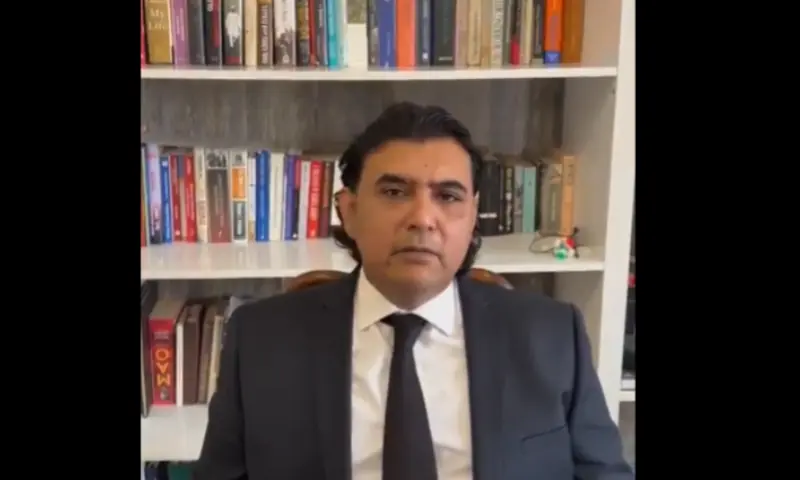
The legal battle challenging Pakistan’s 26th Constitutional Amendment has intensified, as Mustafa Nawaz Khokhar, Vice Chairman of the Tehreek-i-Tahaffuz Ayeen-i-Pakistan (TTAP), filed an appeal against the Supreme Court (SC) registrar’s decision to reject his petition. The petition sought the formation of a full court bench to hear the foundational challenges to the landmark amendment.
The 26th Amendment, enacted on October 21, 2024, fundamentally altered the judicial landscape by curtailing the Supreme Court’s suo motu powers and shifting the authority to nominate the next Chief Justice of Pakistan (CJP) from the senior-most judge to a Special Parliamentary Committee selecting from among the three most senior judges.
Khokhar, a former senator, confirmed the move on X, stating, “I’ve filed an appeal against the registrar’s decision to return my petition, seeking justice once again. My petition argues that the majority decision of the Practice & Procedure Committee remains valid in law and cases related to the 26th should only be heard by a full court.”
The Registrar’s Jurisdiction under Scrutiny
The appeal, submitted through Advocate Shahid Jamil Khan, requests the SC to set aside the September 19 decision and to “register and entertain the said petition in accordance with law.” The plea centers on a profound legal contention regarding the separation of powers within the judiciary.
It argues that the registrar, operating on the administrative side, possesses no jurisdiction to determine the maintainability of a petition filed under Article 184(3) of the Constitution. Such a question, the appeal contends, is a matter that can only be decided by the Hon’ble Court itself in the exercise of its judicial authority.
“Even if a petition appeared non-maintainable under the Constitution, law or the SC Rules,” the appeal states, the “issue must be placed before the court for adjudication on the judicial side.” This argument underscores the need for judicial transparency and prevents an administrative officer from assuming a judicial role.
Internal Judicial Deliberations Revealed
Adding a layer of internal institutional complexity, the case has brought to light minutes suggesting that the sitting CJP Yahya Afridi ignored a decision made in October 2024 by a committee to bring the challenges to the 26th Amendment before the full court.
The committee, convened on October 31, 2024, under the Practice and Procedure Act (PPA) 2023 by senior puisne judge Justice Syed Mansoor Ali Shah and Justice Munib Akhtar, had recommended a full court hearing. CJP Afridi, who chairs the committee, responded that he did not find it appropriate to call for such a hearing. Furthermore, minutes dated May 20, 2025, show Justice Shah stressing that meaningful consultation was the core purpose of the PPA and that delegating powers to the SC’s registrar was not covered by the act.
The Supreme Court is currently seized with multiple petitions against the amendment, which critics argue “abrogates, repeals, alters and destroys the basic features of the Constitution.” An eight-member Constitutional Bench (CB), headed by Justice Aminuddin Khan, is set to resume proceedings on the petitions on Tuesday, October 7.
The intensifying legal conflict highlights a crucial power struggle between the judiciary and parliament, with major implications for the rule of law and the constitutional future of the country.
