

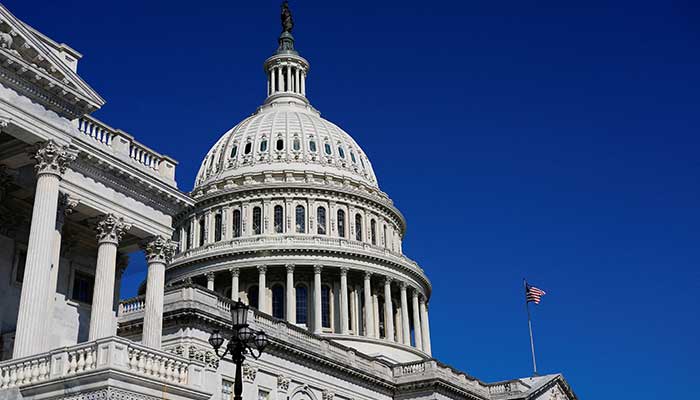
WASHINGTON—A deep impasse between Republican President Donald Trump and congressional Democrats has triggered the 15th U.S. government shutdown since 1981. With no clear path to a solution, the two parties remain locked in a struggle over federal spending and a major healthcare initiative.
What Republicans Want
Despite controlling both the House of Representatives and the Senate, Republicans need Democratic votes to pass funding bills. This year, they have already achieved significant budget victories, notably through the “One Big Beautiful Bill,” passed in July. That legislation:
- Increased spending for defense and immigration enforcement.
- Rolled back spending on green energy and other Democratic priorities.
- Made major cuts to Medicaid (healthcare for low-income and disabled people) to offset tax cuts mainly benefiting the wealthy.
Republicans have stated they are willing to vote for a continuing resolution (CR) that would extend funding at current levels through November 21, allowing time to negotiate a full-year deal. They accuse Democrats of using the stopgap measure to push unrelated partisan issues.
Democrats’ Demands and Leverage
As the minority party, Democrats wield significant power because Senate rules require 60 votes to advance most legislation in the 100-seat chamber, meaning they control at least seven crucial votes.
Democrats are using this leverage to push for renewing expanded healthcare subsidies for individuals who purchase insurance through the Affordable Care Act (ACA).
- ACA Subsidies: Their proposal would make permanent enhanced tax breaks that are otherwise due to expire at the end of the year and extend them to more middle-income households.
- Impact of Expiration: The nonpartisan Kaiser Family Foundation warns that if these tax breaks expire, health insurance costs will “increase dramatically” for many of the 24 million Americans who receive coverage through the ACA. The impact would be especially severe in Republican-controlled states that have not expanded Medicaid.
- ACA Protections: Democrats also want specific language inserted into the funding bill to prohibit President Trump from unilaterally ignoring or temporarily withholding funds for their ACA provisions. They also want to roll back other restrictions on ACA coverage previously enacted by the Republicans.
The nonpartisan Congressional Budget Office (CBO) estimates these Democratic-backed ACA changes would provide health coverage for seven million Americans by 2035 but would also increase government healthcare spending by $662 billion over 10 years.
Republicans have stated they are open to considering a “fix” for the expiring tax breaks but insist it must be handled separately.
