

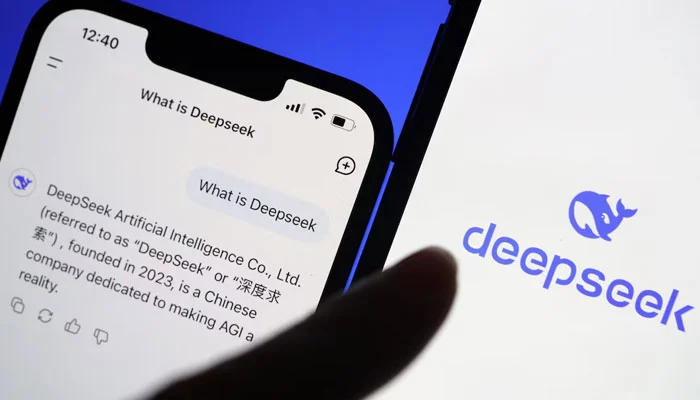
HANGZHOU, CHINA: Chinese AI developer DeepSeek has released its latest “experimental” model, claiming the new iteration is both more efficient to train and significantly better at processing long sequences of text than its previous large language models (LLMs). The launch signals a renewed push in the high-stakes global competition for AI dominance.
The Hangzhou-based company designated DeepSeek-V3.2-Exp as an “intermediate step toward our next-generation architecture” in a post shared on the developer forum Hugging Face. This model arrives as the tech world closely watches the capabilities and cost structures emerging from China.
Pressure on Rivals and Cost Reduction
This forthcoming architecture is anticipated to be DeepSeek’s most important product release since its earlier V3 and R1 models, which previously sent a jolt through Silicon Valley and international tech investors.
A key feature of the V3.2-Exp model is a mechanism dubbed DeepSeek Sparse Attention. The Chinese firm asserts that this innovation can effectively cut computing costs and simultaneously boost certain types of model performance. Reinforcing its cost advantage, DeepSeek announced on Monday via X that it is slashing its API prices by “50%+”.
While this particular “intermediate” version may not roil markets to the extent its predecessors did in January, a successful rollout of the full next-generation architecture could put significant pressure on domestic rivals, such as Alibaba’s Qwen, and US counterparts like OpenAI.
For DeepSeek to repeat the success of R1 and V3, it must convincingly demonstrate high capability at a fraction of the cost that competitors charge and spend on model training. The AI industry is now focused on whether DeepSeek’s experimental step can solidify its position as a major contender capable of redefining the price-to-performance ratio in the large language model arena.
