

THARPARKAR, PAKISTAN:
While the livestock sector contributes a substantial 23 percent to Pakistan’s GDP and employs over 37 percent of its labour force, its role in the arid expanse of Thar is far more profound. Here, where crop failure is a frequent reality, livestock is not just an asset—it is the primary safety net, the central pillar of survival, and the only source of food security and income for millions of families.
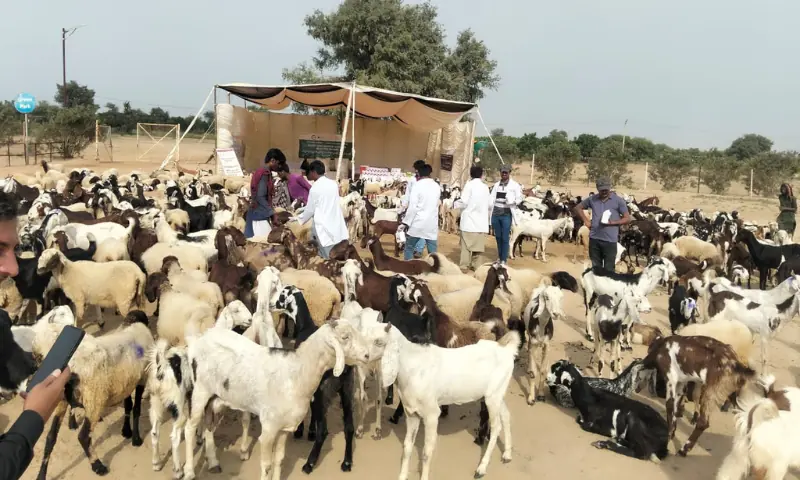
The region’s livestock population is immense, exceeding six million, nearly four times the human population, according to official data. Yet, the absence of basic veterinary services and modern care knowledge has left these communities vulnerable. A single disease outbreak carries the constant threat of wiping out entire herds, dismantling years of accumulated wealth and stability.
Addressing this critical need, the Thar Foundation—the CSR arm of Sindh Engro Coal Mining Company (SECMC) and other Block II entities—launched the Livestock Improvement Programme (LIP) earlier this year. This tripartite effort, in partnership with the Livestock and Fisheries Department and Sindh Agriculture University Tandojam, focuses on enhancing training, research, and capacity building to strengthen livestock productivity across Tharparkar.
Empowering Women and Driving Health Outcomes
The programme is strategically operational across 23 villages in Thar Coal Block II and Gorano, built on three core pillars: building farmer capacity, improving husbandry practices, and deploying mobile veterinary clinics.
Already, 25 farmer groups, totaling 656 individuals, have participated in intensive training sessions covering livestock management, commercial practices, and sustainability. Crucially, 55 awareness sessions have reached approximately 1,200 farmers, underscoring the vital role of vaccination, deworming, and proactive disease prevention.
Recognising the central role of women in daily animal care, the LIP has organised 16 dedicated sessions for 375 women farmers. These sessions equip women to identify early signs of illness and provide essential home care, resulting in healthier herds and greater household resilience.
Measurable Results: Vaccination, Breeding, and Care at the Doorstep
The programme has yielded significant, measurable outcomes on the ground. Around 20,500 small ruminants (sheep and goats) have been vaccinated against major diseases like PPR and Enterotoxemia, and 1,240 cattle have been protected against Lumpy Skin Disease. A large-scale deworming drive has successfully treated 37,200 animals, directly improving nutrition absorption and reducing mortality rates. Mobile veterinary teams have further brought essential care directly to communities, delivering on-site treatment to 435 animals.
Breeding interventions are also underway, focused on indigenous breeds—such as the Thari cow, Kundi buffalo, and Thari camel—that are perfectly adapted to Thar’s arid environment. Over 40 candidates have completed 60-day training in Artificial Insemination (AI), enabling the introduction of systematic breeding services. Furthermore, the programme promotes drought-resistant fodder crops and community-managed fodder banks to combat chronic feed shortages.
Lifting Incomes and Securing Futures
The human impact of the LIP is evident in the financial returns: participating households report income increases of 15 to 20 percent through higher milk production, improved breeding outcomes, and drastically reduced losses. For women, the focus on healthier small ruminants directly strengthens both household nutrition and independent income streams.
Professor Imdad Hussain Leghari of Sindh Agriculture University Tandojam lauded the initiative, particularly its work on value addition and the establishment of a milk collection system. He noted that this system “will allow local milk to reach major cities and generate higher income for communities,” structurally improving market access.
Moving forward, the programme plans to expand its reach, intensify crossbreeding via AI, improve farmers’ access to credit, and establish structured milk markets to guarantee fair pricing. Plans also include creating a regional Livestock Development Centre to further enhance breeding and processing facilities for value-added products.
For a nation grappling with food security and vulnerable rural livelihoods, the lessons emanating from the Thar Foundation’s initiative are clear: access to knowledge, preventive care, and doorstep treatment is not just an investment in livestock productivity—it is an investment in securing brighter, more resilient futures for families across Tharparkar.
