

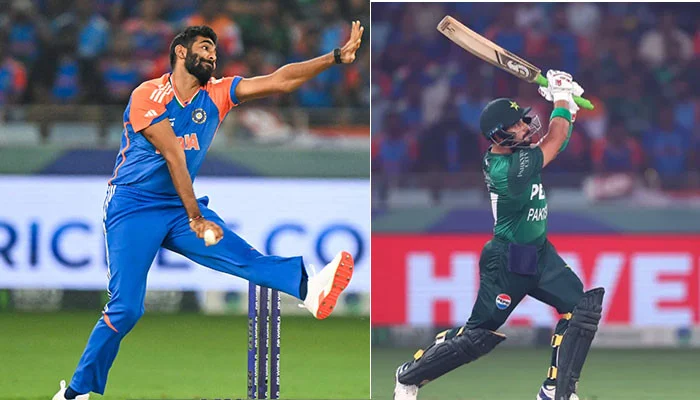
In the Shadow of Victory: One Over That Shattered Millions of Dreams
By: Raja Zahid Akhtar Khanzada
Cricket is not merely a sport. It is a promise, a dream, and a breath intertwined with the heartbeat of a nation. The glittering lights of Dubai International Stadium did not just illuminate a cricket match on Sunday night; they framed a narrative of passion, politics, ego, and shattered hopes. The Asia Cup 2025 final was far more than a 20-over contest it was a story in which the fate of millions seemed to rise and fall with every delivery.
For Pakistan, the match carried significance beyond the boundary ropes. The nation had recently tasted a historic victory in the practical realm of geopolitics. A new balance of power had begun to emerge, filling the country with pride and igniting hopes that this triumph would now be mirrored on the cricket field. From Karachi to Kashmir, from London to Los Angeles, every Pakistani and every supporter of Pakistan around the world dared to dream that this final would be a continuation of that victory. Yet between dreams and reality, there often lies only a fleeting moment sometimes as brief as a single over.
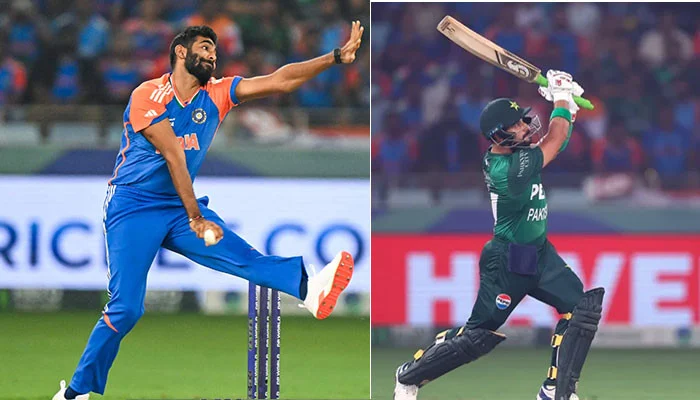
The match began like the first rays of dawn breaking through the darkness. Sahibzada Farhan and Fakhar Zaman launched into the Indian bowlers with fearless aggression. Every shot they played felt like a heartbeat racing faster, every boundary a promise of glory. By the end of the first ten overs, Pakistan stood at 84 for one, a commanding start that electrified fans both inside the stadium and around the world. Faces lit up with joy, prayers were whispered with trembling lips, and belief ran high that history was about to be rewritten.
But when Farhan was dismissed for a blistering 57 off 38 balls, it was as though a lamp of hope had been suddenly extinguished. What followed was a collapse as inevitable as autumn leaves falling to the ground. One wicket fell, then another, and then another until Fakhar, the final bastion of resistance, was gone for 46. The dream of a total near 170 evaporated, replaced by the cold reality of 146 all out.
Still, there was belief. In the opening overs of India’s chase, Pakistan’s bowlers roared back into contention. At the end of five overs, India had scored just 36, and Pakistan’s win probability had climbed to 65 percent. It felt as though the nation was only a few overs away from a famous victory.
Then came the turning point. Saim Ayub delivered a brilliant 14th over, conceding just five runs and tightening the grip on India. The very next over, however, proved catastrophic. Haris Rauf leaked 17 runs, undoing all the pressure built before. In a matter of balls, the match shifted.
A stunned silence fell over the stadium. The roars of joy turned into whispers of despair. Haris would go on to concede 50 runs in just 3.4 overs, including four boundaries and three sixes, without taking a single wicket. With India needing 10 off the final over, he conceded 13, handing the game to the opposition. One ball, one shot, and the dreams of millions lay shattered across the Dubai outfield.
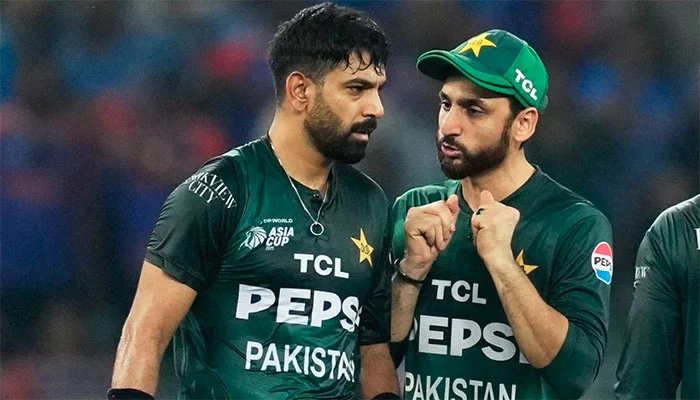
For Pakistani fans, it was heartbreak of the cruellest kind. Social media erupted with anger and anguish. “We snatched defeat from the jaws of victory,” one user wrote. Others labeled Haris a “villain,” a far cry from the days when he was celebrated as Pakistan’s death-over specialist. In cricket, the line between hero and villain is razor-thin, sometimes as short as one over.
As the match ended, a different drama unfolded off the field. The Indian team refused to accept the trophy from Mohsin Naqvi, chairman of the Pakistan Cricket Board and president of the Asian Cricket Council. The BCCI had communicated this decision well in advance. Mohsin Naqvi, under intense pressure, stood firm and refused to hand over the trophy to anyone else. In an unprecedented move, the trophy was withdrawn from the presentation ceremony altogether, leaving the victorious team to depart empty handed.
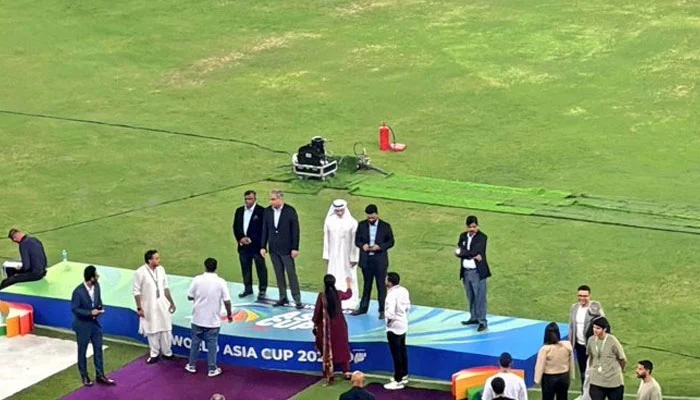
It was more than just a trophy. It was a symbol of sportsmanship and respect, both of which were shattered in Dubai that night.
To compound matters, sections of the Indian media twisted the narrative. The Times of India ran a headline claiming Mohsin Naqvi had “run away with the trophy,” painting a picture as though he had stolen it. This claim was not just misleading, it was absurd. The truth was clear: India’s obstinance had disrupted the ceremony, and Naqvi had chosen dignity over submission by ending the event.
This pattern is not new. When losses must be hidden or egos protected, facts are buried beneath layers of propaganda. This was yet another attempt to discredit Pakistan and obscure the reality of what had transpired.
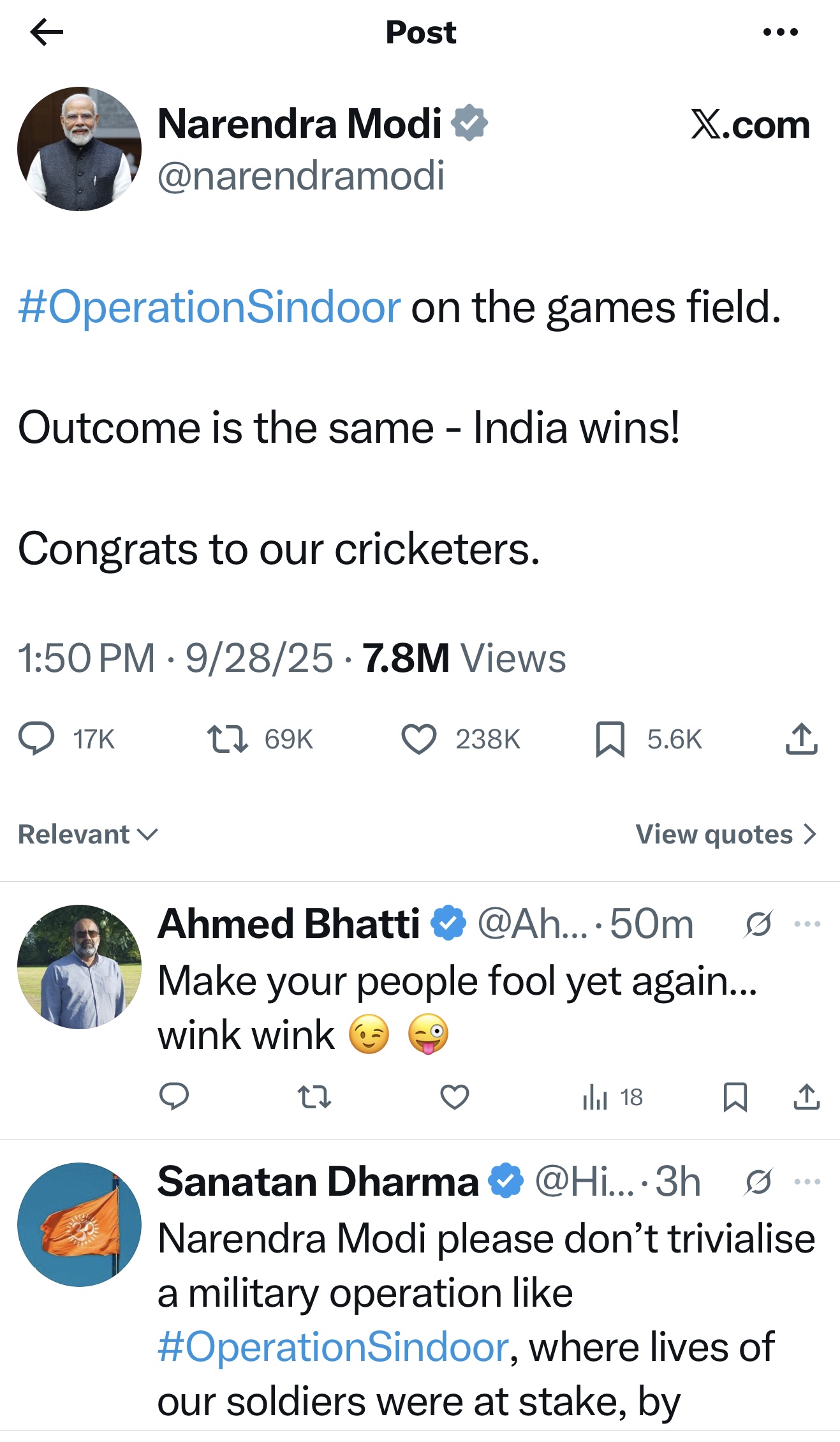
Meanwhile, Indian Prime Minister Narendra Modi added fuel to the fire with a controversial statement on X (formerly Twitter): “#OperationSindoor on the games field. Outcome is the same – India wins! Congrats to our cricketers.”
https://x.com/narendramodi/status/1972373287985401858?s=48
Though it appeared to be a congratulatory message for India’s cricket team, it carried far deeper political undertones. Modi framed the cricket match as if it were a military operation, casting Pakistan’s cricket team not as sporting rivals but as enemy combatants.
This rhetoric was especially jarring in light of recent events. In the actual conflict between the two nations, India had suffered a clear defeat, with seven of its fighter jets shot down and its military’s morale shaken. International observers and media outlets worldwide reported on India’s setback, acknowledging Pakistan’s operational superiority.
By equating a cricket win with a military triumph, Modi attempted to rewrite the narrative, to present to his people a version of reality in which India stood victorious in both war and sport. It was a calculated effort to mask military failure by draping it in the celebratory garb of a cricket trophy.
Such statements reveal an uncomfortable truth: India’s leadership lacks the confidence to confront its defeats openly. When a sporting victory is framed as an “operation,” it signals a deep insecurity. It suggests that even in triumph, there is fear fear of acknowledging the actual outcome on the battlefield, where the world knows what truly happened.
This messaging also serves a domestic purpose. By conflating sport with warfare, Modi seeks to rally nationalist sentiment, distracting from the losses suffered in real combat. While this tactic may temporarily appease the public, it cannot deceive the international community, which saw firsthand India’s failures during the conflict.
The tragedy of this narrative is that it erodes the very essence of cricket. The sport is meant to bridge divides, to foster respect between nations. Instead, Modi’s words transform it into another weapon of political propaganda, turning the field of play into a theater of hostility.
As the dust settled, it became clear that this was not just another cricket final. It was a clash of narratives, of perceptions and realities. For the third time, Pakistan had lost an Asia Cup final to India. Each time, new dreams were built and broken. But this loss felt different. It was not just a sporting defeat; it was the heartbreak of millions whose hopes had been tethered to a green flag fluttering across the globe.
And yet, amid the pain, there was dignity. Pakistan’s players accepted their medals and exited the stage with grace, even as the opposing side rejected the trophy and twisted the truth.
That night in Dubai taught a profound lesson: that the battles fought in stadiums are no less significant than those fought on the world stage. Sometimes, the team that wins leaves empty-handed, while the team that loses walks away with its honor intact.
In the glow of Dubai’s lights, this match became a metaphor. It reminded us that victory without humility is hollow, and that even after practical battles are won, success on the field demands strategy, discipline, and composure.
For Pakistan, the defeat was bitter. But history shows that this nation does not treat loss as an end — it treats it as a beginning. The one over that shattered millions of dreams may also be the over that inspires future triumphs.
On that night, one over changed everything. And in that moment, millions of Pakistani hearts broke as one.
 ————————————————————
Note: Raja Zahid Akhtar Khanzada is a senior journalist with over four decades of experience in print and digital media. He is associated with one of Pakistan’s leading media groups and serves as Editor-in-Chief of Jago Times, a well-known bilingual publication based in the United States with a global readership.
He has extensively covered geopolitics, diplomacy, human rights, and diaspora affairs, reporting from major international events including United Nations sessions and White House meetings. Known for his fearless journalism and insightful analysis, Raja Zahid remains a trusted voice on international relations and current affairs.
