

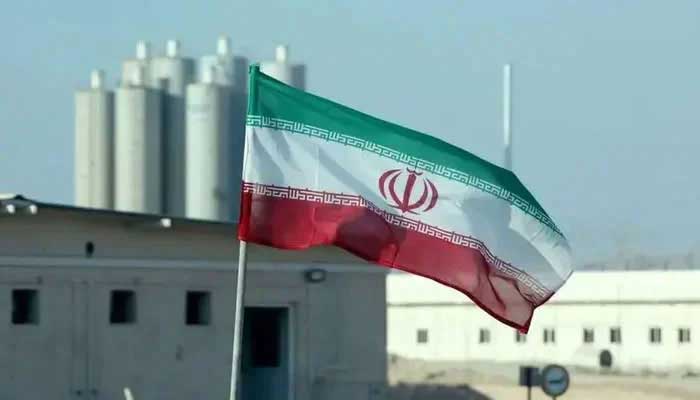
The United Nations reinstated an arms embargo and a range of other sanctions on Iran on Saturday, following a procedural move triggered by key European nations. Tehran has already issued a warning that this reinstatement will be met with a harsh response.
Britain, France, and Germany initiated the mechanism at the UN Security Council to bring back sanctions, arguing that Iran has been in violation of the nuclear accord designed to prevent the country from developing a nuclear weapon. Iran consistently denies any ambition to acquire nuclear weapons.
Iran’s Foreign Minister Abbas Araqchi urged the UN Secretary-General on Sunday to prevent any revival of mechanisms intended to implement UN sanctions after they were reimposed on Tehran. In a letter posted on X (formerly Twitter), Araqchi wrote: “We urge you to prevent any attempt to revive the sanctions mechanisms, including the Sanctions Committee and the Panel of Experts.” He emphasized that Tehran will not recognize any effort to extend, revive, or enforce the UN sanctions.
The effective end of the decade-long nuclear deal, originally signed by Iran, Britain, Germany, France, the United States, Russia, and China, is likely to significantly exacerbate tensions across the Middle East, coming just months after Israel and the US conducted bombings on Iranian nuclear sites. UN sanctions imposed by the Security Council in resolutions adopted between and were officially reinstated at EDT Saturday ( GMT). Last-minute attempts to delay the return of all sanctions on Iran failed on the sidelines of the annual gathering of world leaders at the UN this week.
International Statements and Sanctions Details
Following the passing of the deadline, the foreign ministers of France, Britain, and Germany released a joint statement: “We urge Iran and all states to abide fully by these resolutions.” While Tehran has cautioned of a harsh response, Iranian President Masoud Pezeshkian stated on Friday that Iran has no intention of withdrawing from the Non-Proliferation Treaty. On Saturday, Iran announced it was recalling its ambassadors to Britain, France, and Germany for urgent consultations.
Russia has strongly disputed the return of UN sanctions on Iran. Russian Foreign Minister Sergei Lavrov told reporters at the UN earlier on Saturday: “It is unlawful, and it cannot be implemented,” adding that he had sent a letter to UN Secretary-General Antonio Guterres warning that it would be “a major mistake” for him to acknowledge a return of the sanctions. The UN Security Council website was swiftly updated on Saturday evening to reflect the official return to the sanctions regime.
Diplomacy Remains an Option
The European powers had offered a potential six-month delay in reinstating the sanctions to create space for negotiating a long-term deal. This offer was contingent on Iran restoring access for UN nuclear inspectors, addressing concerns regarding its stock of enriched uranium, and engaging in talks with the United States.
“Our countries will continue to pursue diplomatic routes and negotiations. The reimposition of UN sanctions is not the end of diplomacy,” the foreign ministers of Britain, France, and Germany affirmed. “We urge Iran to refrain from any escalatory action and to return to compliance with its legally binding safeguards obligations.”
US Secretary of State Marco Rubio stated that US President Donald Trump remains clear that diplomacy is still an option for Iran, and a deal represents the best outcome for the Iranian people and the world. Rubio stressed that for this to occur, Iran must “accept direct talks, held in good faith, without stalling or obfuscation.” He emphasized that until a new deal is secured, it is crucial that countries implement the sanctions “immediately in order to pressure Iran’s leaders to do what is right for their nation, and best for the safety of the world.”
Iran’s economy is already severely impacted by crippling US sanctions, which were reimposed in after President Trump withdrew from the original pact during his first term. The Iranian rial currency continued its decline amid fears of the new sanctions, falling to a new record low of per US dollar on Saturday, down from approximately on Friday, according to foreign exchange websites, including Bon-bast.com.
With the return of the UN sanctions, Iran is once again subject to an arms embargo, a ban on all uranium enrichment and reprocessing activities, and any activity related to ballistic missiles capable of delivering nuclear weapons, including test launches. Other reinstated sanctions include a travel ban on dozens of Iranian individuals, an asset freeze on numerous Iranian individuals and entities, and a ban on the supply of any goods that could be utilized in Iran’s nuclear program. All nations are now authorized to seize and dispose of any items banned under the UN sanctions, and Iran will be prohibited from acquiring any interest in any commercial activity in another country involving uranium mining, production, or the use of nuclear materials and technology.
