

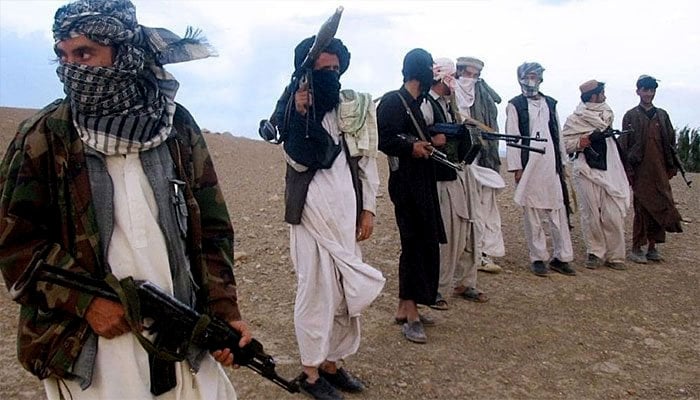
Pakistan, China, Iran, and Russia have collectively voiced profound concern regarding the presence of terrorist organisations operating from Afghanistan, specifically naming Al-Qaeda, the proscribed Tehreek-e-Taliban Pakistan (TTP), the Balochistan Liberation Army (BLA), and other similar militant entities. The joint statement followed the fourth quadripartite meeting on Afghanistan, convened by Russia on the margins of the 80th United Nations General Assembly session in New York.
At the conclusion of the meeting, the four nations issued a joint statement reviewing the deteriorating situation in Afghanistan and warning that the militant groups pose a grave threat to both regional and global security.
They strongly urged the Afghan authorities to undertake “effective, concrete and verifiable actions” against these terrorist outfits. This includes dismantling training camps, cutting off financing, and preventing recruitment and access to weapons. The four sides stressed that Afghan soil must not be used against its neighbours or beyond, while simultaneously pressing for the non-discriminatory elimination of all militant groups.
The four-nation statement was released days after Deputy Prime Minister Ishaq Dar, in his inaugural address to the OIC Contact Group on Afghanistan at the UNGA, pressed the Afghan interim government to adopt concrete and verifiable measures to ensure its territory is not utilised for terrorism against neighbouring countries, particularly Pakistan.
Pakistan has experienced a surge in cross-border terror incidents since the Taliban’s return to power in 2021, particularly in the bordering provinces of Khyber Pakhtunkhwa (KP) and Balochistan. The two nations share a porous border of approximately 2,500 kilometers, which includes vital crossing points for regional trade and public relations. However, terrorism remains a critical issue for Pakistan, which has repeatedly called on Afghanistan to prevent its territory from being used by groups like the TTP to launch attacks inside Pakistan.
The joint statement further reaffirmed support for Afghanistan as an “independent, united, and peaceful state, free from terrorism, war and narcotics.” The four sides acknowledged Kabul’s efforts to curb opium cultivation but expressed alarm over the rise of synthetic drugs like methamphetamine.
Addressing the refugee crisis, the ministers called upon Kabul to create conditions conducive for the safe return of internally displaced Afghans, and lauded Pakistan and Iran for generously hosting large populations of refugees. They also reiterated standing demands for an inclusive political structure, the protection of women’s rights, and their access to education and public life.
