

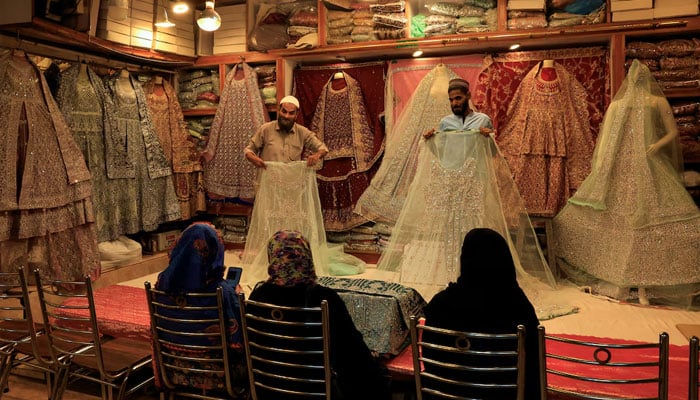
Tax authorities in Pakistan are using evidence from a near-million-dollar wedding—complete with diamond sets and a drone light show—as part of a new “Lifestyle Monitoring Cell” tasked with scanning social media for extravagant spenders.
A team of 40 investigators from the Federal Board of Revenue (FBR) has started analyzing posts on Instagram, TikTok, and YouTube this week. Their goal is to identify influencers, celebrities, realtors, and businesspeople whose spending appears disproportionate to their declared income.
“It’s open-source—their Instagram accounts are a public declaration,” a senior FBR official said, noting that tax evasion cases can now be initiated in a matter of hours. The FBR did not respond to a Reuters request for comment.
This new monitoring cell was created to address Pakistan’s persistent failure to meet revenue collection targets and to help achieve the more demanding goals set in this year’s International Monetary Fund (IMF)-backed budget. With one of the lowest tax-to-GDP ratios in Asia, Pakistan’s chronic revenue weakness has led it to seek nearly two dozen IMF programs. Less than 2% of the country’s population pays income tax.
According to an internal document seen by Reuters, the unit was formally established this month. Its mandate is to “systematically monitor, scour and analyse data from major social media platforms” to identify individuals who display wealth but are either unregistered for tax or declare income that doesn’t align with their expenditures and assets.
The document states that the cell will create digital profiles of suspects, evaluate the money behind their lifestyles, and prepare reports that can be used for tax or money laundering investigations. It will also maintain a central database of evidence, including screenshots and timestamps.
Diamonds, Drones, DJs, and Databases
Officials said one wedding under review had an estimated cost of nearly 248 million Pakistani rupees ($878,000). Documents reviewed by Reuters revealed that nearly $283,000 was spent on diamond and gold sets and $124,000 on bridal outfits from top South Asian designers.
Guests entered through a hallway of floral arches as drones lit up the sky, followed by a multi-course meal for 400 people. The six-day celebration featured high-end makeup artists, DJs, and traditional qawwali music bands, with international consultants brought in to choreograph the event. Officials said this type of lavish spending is exactly what the new unit is targeting.
This wedding is one of several cases currently under review. Investigators are also examining videos showcasing luxury cars, high-end property tours, and influencers flaunting expensive lifestyles.
“People themselves tag the event managers, the caterers, the jewellers, etc. It makes our work easy,” another official said, adding that the expenditures of the two families involved did not match their income declarations.
Despite its recent formation, the new unit has already shortlisted multiple cases for deeper scrutiny. While previous efforts to catch high-earners often faltered, officials believe the focus on social media provides stronger leads and a quicker way to flag undeclared wealth.
