

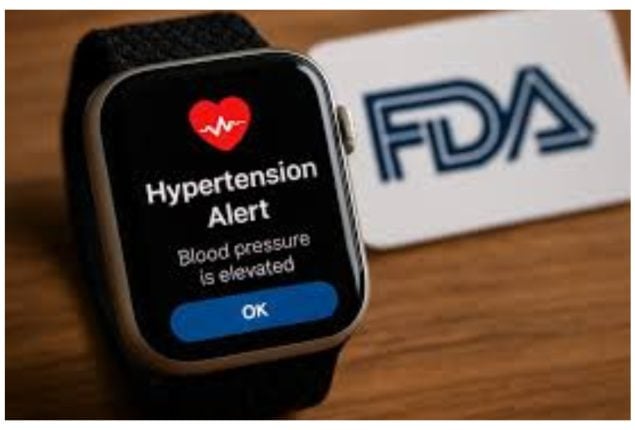
The U.S. Food and Drug Administration (FDA) has given Apple clearance to integrate a hypertension detection feature into its smartwatches, greenlighting one of the most ambitious health tools yet built into a consumer wearable.
The feature, which was revealed alongside the new iPhone lineup at Apple’s September 9 event, is set to debut this month on the Apple Watch Series 9, Series 10, Series 11, and the premium Ultra 2 and Ultra 3 models. Apple stated it expects to make the tool available in over 150 countries, including the U.S. and the European Union.
Unlike traditional blood pressure monitors that use an inflatable cuff, Apple’s system utilizes the watch’s optical heart sensor to monitor how blood vessels respond to heartbeats. The algorithm silently analyzes data collected over 30-day periods and sends an alert if it detects consistent signs of hypertension.
The company emphasized that while the tool may not catch every single case, it could potentially notify more than a million people of undiagnosed high blood pressure within its first year.
Why It’s Important
Hypertension—or persistently high blood pressure—is the leading modifiable risk factor for heart attacks, strokes, and kidney disease. The World Health Organization (WHO) estimates it affects approximately 1.3 billion adults globally, many of whom remain undiagnosed due to the need for specific equipment or infrequent testing. By embedding passive screening into a device already worn by millions daily, Apple is hoping to help bridge that gap.
Apple’s Health Strategy
The hypertension detector adds to an expanding range of health functions on the Apple Watch, which already includes ECG monitoring, irregular heart rhythm notifications, and blood oxygen tracking. Analysts suggest this move highlights Apple’s goal of making its smartwatch a primary tool for preventive health, and a method to lock users more deeply into its ecosystem. Bloomberg previously reported on the FDA clearance, stating that Apple plans to begin the feature’s rollout in the coming week. Apple has declined to comment.
