

The Israeli military announced it has expanded operations in Gaza City, bombarding what it termed “Hamas infrastructure.” Meanwhile, displaced Palestinians, traumatized by the advance, say they have no means to flee. Palestinian Toufic Abu Mouawad, who left a camp for displaced people, described the situation as “really bad,” with tanks firing shells all night. He added, “I want to flee with the boys, the girls, the children. This is a very tragic situation. We call on all the Arab countries and the people who have a good conscience to stand with us.”
Israeli forces now control the eastern suburbs of Gaza City and have been heavily shelling the Sheikh Radwan and Tel Al-Hawa areas. According to AFP, Israeli fire killed at least 33 people across the territory on Friday, with 18 of those deaths occurring in Gaza City. The Gaza health authorities confirmed this death toll. The Israeli military warned it would operate with “unprecedented force” in Gaza City, urging residents to flee as it continues its ground offensive on the largest urban center. The military estimates that 480,000 people have fled Gaza City since late August, dropping leaflets to inform residents they could use the newly reopened Salah al Din road to escape to the south.
New Title: Discussions Held on Post-War Gaza Administration
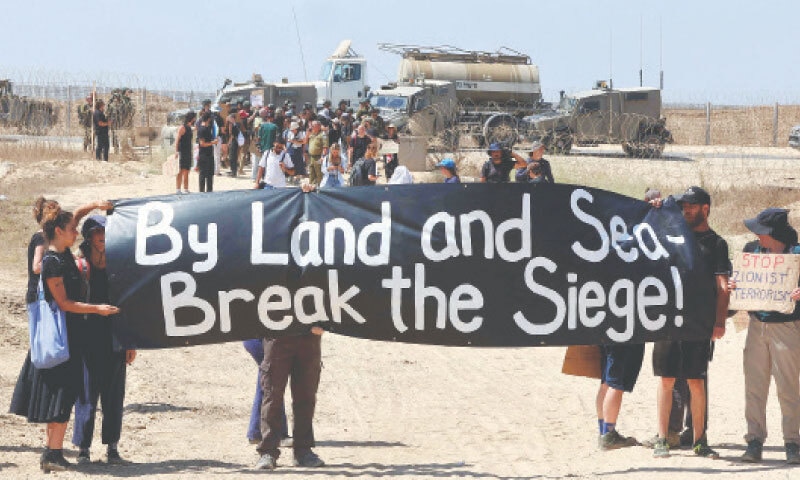
The Israel Defense Forces (IDF) also said that an airstrike had killed Mahmoud Yusuf Abu Alkhir, whom they identified as the deputy head of military intelligence in Hamas’s Bureij Battalion. On the Israeli side of the border, dozens of protesters gathered, holding banners with slogans such as “Stop the genocide in Gaza” and “Free Gaza, isolate Israel” to call for an end to the war.
Meanwhile, U.S. Ambassador Mike Huckabee told Reuters that the United States has held talks with Gulf Arab states about the possibility of them administering Gaza after the war ends. Huckabee stated there have been conversations about an interim governing structure involving Gulf Arab states, with a potential supervisory role for the U.S., while a decision on a permanent arrangement would be made later. He clarified that these were just discussions and that no agreements were ready for signature, but he did not specify when the talks took place or which Gulf states were involved.
