

The UN Security Council did not adopt a draft resolution on Friday to permanently lift sanctions on Iran. However, Tehran and key European powers still have eight days to try and agree to a delay. The 15-member council was required to vote on the resolution after Britain, France, and Germany launched a 30-day process on August 28 to reimpose UN sanctions, accusing Tehran of failing to abide by a 2015 deal aimed at preventing it from developing a nuclear weapon. Iran denies any such intention.
New Title: Pakistan’s Stance and Diplomatic Efforts
Russia, China, Pakistan, and Algeria voted in favor of the draft text. Nine members voted against, and two abstained. Pakistan’s Permanent Representative to the UN, Asim Iftikhar Ahmad, stated that Islamabad believes all issues regarding Iran’s nuclear program should be resolved peacefully through dialogue and cooperation. He stressed the need for more time for diplomacy to succeed and emphasized the imperative of avoiding any confrontation that could further complicate the situation.
Mr. Ahmad said that Pakistan underscores the importance of preserving the framework of the Joint Comprehensive Plan of Action (JCPOA) and Resolution 2231 as the basis for an amicable solution, without resorting to coercive measures until a successor arrangement or “new deal” is achieved.
New Title: Iran and US Reactions and Next Steps
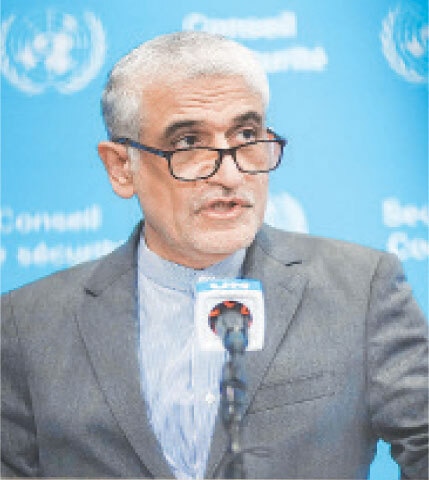
Iran’s UN Ambassador Amir Saeid Iravani told reporters that “the door for diplomacy is not closed,” but Iran, not its adversaries, will decide with whom and on what basis to engage. He said Iran’s Foreign Minister Abbas Araqchi will meet with his European counterparts in New York next week on the sidelines of the UN General Assembly. Iravani added that Friday’s divided vote showed there was “no consensus in the council” and that the decision “weakens diplomacy and risks dangerous consequences for non-proliferation.”
Britain, France, and Germany have offered to delay reinstating sanctions for up to six months to allow for talks on a long-term deal. This offer is contingent on Iran restoring access for UN nuclear inspectors, addressing concerns about its enriched uranium stock, and engaging in talks with the United States. Britain’s UN Ambassador Barbara Woodward told the council that without these basic conditions, there is “no clear path to a swift diplomatic solution.”
Acting US Ambassador Dorothy Shea said that while the U.S. voted “no,” it “does not impede the possibility of real diplomacy,” adding that a return of sanctions on Iran “does not preclude later removal through diplomacy.” She added that President Trump has reiterated the U.S.’s readiness for a “meaningful, direct, and timebound dialogue with Iran.” Any delay on reimposing sanctions would require a new Security Council resolution. If a deal on an extension cannot be reached by September 27, all UN sanctions will be reimposed.
