

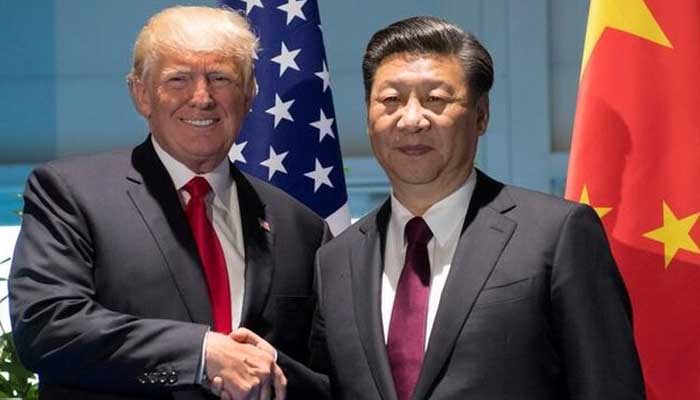
On Friday, Presidents Donald Trump and Xi Jinping spoke by phone, with a primary focus on reaching an agreement that would allow the video app TikTok to remain operational in the U.S. and ease tensions between the two economic superpowers. A U.S. official confirmed that this was the leaders’ first known call in three months and that a potential deal on TikTok was at the top of the agenda, along with trade issues.
While Chinese state broadcaster CCTV did not provide details of the conversation, the call comes as both sides are in discussions about a possible in-person summit between the two leaders at the Asia-Pacific Economic Cooperation (APEC) summit in South Korea from October 30 to November 1.
A key obstacle to a TikTok deal was Beijing’s final approval of a framework agreement reached earlier this week. Although a law passed by Congress mandated that the app be shut down for U.S. users by January 2025 if its Chinese owner, ByteDance, did not sell its U.S. assets, Trump has so far declined to enforce the ban. He has expressed concerns that banning the app could anger its large user base and disrupt political communications. “I like TikTok; it helped get me elected,” Trump said on Thursday, adding, “TikTok has tremendous value. The United States has that value in its hand because we’re the ones that have to approve it.”
Key questions about the potential deal remain, including the precise ownership structure, the level of control China would retain, and whether Congress will approve the arrangement. Reuters has reported that the deal would transfer TikTok’s U.S. assets to American owners, but the U.S. version of the app would still utilize ByteDance’s algorithm. This has raised concerns among lawmakers that Beijing could spy on Americans or conduct influence operations through the app, though China has denied these claims.
Trump, who has positioned his foreign policy as one of deal-making, said on Thursday that they were “pretty close to a deal” on broader trade issues and might “do an extension with China, but it’s an extension based on the same terms that we have right now.” Other points of contention include competition over advanced technologies like semiconductors, U.S. demands for increased purchases of American soybeans and Boeing airplanes, and the U.S. push for China to curb the export of fentanyl-related chemicals.
Recent data indicate a slowdown in both the Chinese and U.S. economies. Since taking office in January, Trump has significantly raised tariffs, leading to a tit-for-tat trade war. A series of limited agreements since May has temporarily paused this conflict. Experts believe that “China’s effective use of sticks (rare earths) and carrots (TikTok) has turned things heavily in their favour,” according to Scott Kennedy of the Center for Strategic and International Studies. Despite these tariffs, China remains the third-largest trading partner of the U.S. and the source of its largest bilateral trade deficit in goods.
As a sign of goodwill ahead of the call, China allowed the departure of Wells Fargo banker Chenyue Mao, who had been prevented from returning to the U.S. for several months.
