

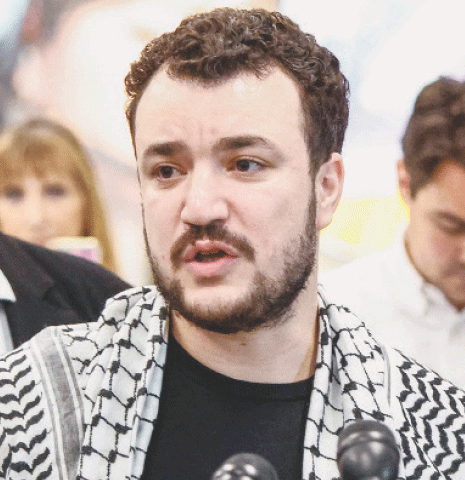
A U.S. immigration judge, Jamee Comans, has ordered the deportation of pro-Palestinian activist Mahmoud Khalil to either Algeria or Syria. The order, dated September 12, stems from claims that he willfully omitted material information from his green card application.
Grounds for Deportation Order
According to the court order, Judge Comans found that Khalil’s failure to fully disclose information on his green card application was a deliberate act. The judge asserted that this was not a simple oversight by an “uninformed, uneducated applicant” but rather a purposeful misrepresentation “for the sole purpose of circumventing the immigration process and reducing the likelihood his application would be denied.”
- Who is Mahmoud Khalil? Mahmoud Khalil is a 30-year-old legal permanent resident of the United States, a former Columbia University student, and a prominent leader of pro-Palestinian campus protests. He is married to a U.S. citizen and has a U.S.-born son.
- Previous Detention: Khalil was previously detained by immigration authorities for over 100 days beginning in March and was released in June after a federal judge, Michael Farbiarz, ruled that punishing someone over a civil immigration matter was unconstitutional.
Response and Appeal
Khalil, in a statement to the American Civil Liberties Union, called the order an act of retaliation by the Trump administration for his free speech, labeling the immigration court a “kangaroo court.” He accused the administration of “fabricating baseless and ridiculous allegations” to silence him for speaking out against the ongoing “genocide” in Gaza.
His lawyers stated their intention to appeal the deportation order. They also noted that a separate federal district court’s orders remain in effect, which currently prohibit the government from immediately detaining or deporting him while his federal case is ongoing.
Context of Pro-Palestinian Protests
The case against Khalil occurs amidst a broader crackdown by the Trump administration on pro-Palestinian protesters, who are often accused of antisemitism and supporting extremism. Protesters, including some Jewish groups, argue that the government wrongly conflates their criticism of Israel’s actions in Gaza and the occupied territories with antisemitism and their advocacy for Palestinian rights with support for extremism.
