

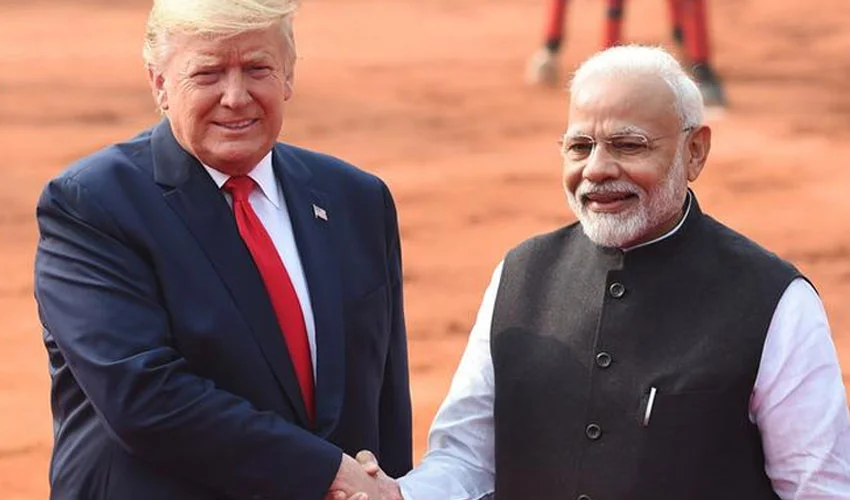
US President Donald Trump extended warm birthday wishes to Indian Prime Minister Narendra Modi on Tuesday, praising his role in efforts to end Russia’s war in Ukraine. The goodwill comes despite trade tensions that threaten to overshadow the relationship.
In a post on his social media platform Truth Social, Trump said he had a “wonderful” call with Modi. “Thank you for your support on ending the War between Russia and Ukraine!” he wrote, calling the Indian leader’s efforts “tremendous.”
Relations between Washington and New Delhi have been strained since Trump raised tariffs on most Indian exports to 50% last month. The move was a retaliation for India’s continued purchases of discounted Russian crude oil, which US officials argue are indirectly financing Moscow’s war in Ukraine. White House officials have also accused Indian refiners of profiting from these imports, further fueling trade friction.
Trade Talks in New Delhi
Despite the tensions, trade officials from both countries met in New Delhi on Tuesday. The US delegation was led by Brendan Lynch, the Assistant Trade Representative for South and Central Asia. In a statement, the Indian commerce ministry said, “Acknowledging the enduring importance of bilateral trade between India and the US, the discussions were positive and forward-looking, covering various aspects of the trade deal.” Both sides agreed to intensify efforts for an “early conclusion of a mutually beneficial Trade Agreement.”
Challenges to Reaching a Deal
India was among the first countries to begin trade negotiations with Washington but has yet to secure a deal that would ease its tariff burden. Exporters warn that the higher US duties are already leading to canceled orders and potential job losses in India’s manufacturing sector. Trump’s decision to link tariffs with geopolitics—by doubling duties on Indian goods from 25% to 50% while citing Russian oil imports—has complicated negotiations even more. Ajay Srivastava of the New Delhi-based Global Trade Research Initiative noted on Tuesday, “Any progress hinges on Washington rolling back the oil-linked 25% duty. Without that, no breakthrough is politically or economically viable.”
