

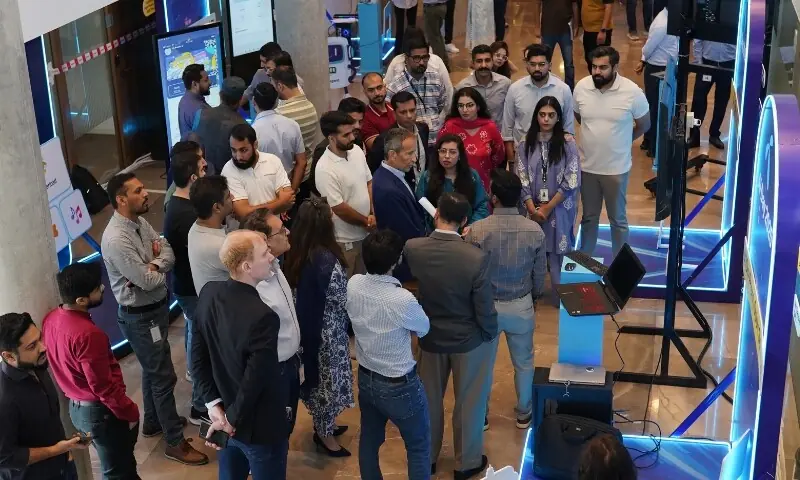
As artificial intelligence (AI) transforms industries globally, Telenor Pakistan is ensuring its transition to an AI-First future begins with its own workforce. The company recently celebrated AI Day as part of a Telenor Group-wide initiative, demonstrating how it is integrating AI not just into its systems but also into the skills, culture, and daily work practices of its employees.
Central to this vision is AI Verse, a new learning program designed to provide employees with practical and inclusive skills for the future. According to Areej Khan, Telenor Pakistan’s Chief People Officer, this investment signifies a shift in mindset that places employees at the core of the digital transformation.
Building an AI-First Culture For Telenor Pakistan, becoming AI-First goes beyond technology. “Technology gives us the tools to reimagine customer experience, enhance reliability, and create smarter operations,” explains Khan. “But technology alone cannot deliver value unless our people have the right skills to use it and the mindset to embrace it.”
This approach redefines AI as a human-driven journey. Every employee, from software engineers to customer care agents, is encouraged to apply AI responsibly in their roles. The goal is to embed AI into everyday learning and decision-making, making it a natural extension of how people think and work.
AI Verse: A Learning Pathway for All The launch of AI Verse was a key highlight of AI Day. Unlike previous training programs that were often role-specific, AI Verse is designed for everyone, from HR and finance to marketing and operations. It introduces skills like prompt engineering, data-driven decision-making, and applied AI use cases, making the subject accessible to all employees regardless of their technical background.
Khan notes that “the impact is simple but profound. Employees can future-proof their careers, stay relevant in a fast-changing environment, and gain the confidence to experiment with AI.”
From Fear to Curiosity Telenor Pakistan has witnessed a significant level of enthusiasm for AI. During the Telenor Group-wide AI Hackathon, over 100 teams from Pakistan participated, one of the highest numbers across the Group. This highlights the appetite and creativity of the local talent pool.
However, the company acknowledges that new technology can also bring apprehension. Employees may worry about job displacement or have questions about data integrity. Khan addresses these concerns by emphasizing the importance of transparent communication. “When people see AI augmenting their work and making service assurance faster and more reliable, they not only adopt it, they advocate for it.” This cultural shift from fear to curiosity is critical to successful AI adoption.
AI in Action The company’s AI Expo showcased how these innovations are already being applied in Pakistan. Among the projects were:
- AI-based Service Monitoring: This system detects faults and anomalies in the IT ecosystem, reducing outage times and protecting critical services.
- Smart Energy Management: An AI solution that predicts grid unavailability, solar production, and battery failures, leading to cost savings and sustainability benefits.
- AI HR Assistant Chatbot: A tool within Microsoft Teams that gives employees instant access to HR policies, streamlining processes and improving the workplace experience.
These initiatives demonstrate that AI is not an abstract promise but a current reality that is enhancing reliability, sustainability, and customer engagement.
Conclusion As industries grapple with the implications of AI, Telenor Pakistan has taken a clear stance: the path to becoming an AI-First organization starts with its people. Through AI Verse, practical projects, and a culture of continuous learning, the company is equipping its employees with the tools, mindset, and confidence to thrive in a digital future. This approach ensures that AI adoption remains human-centered, focused on empowerment rather than disruption.
