

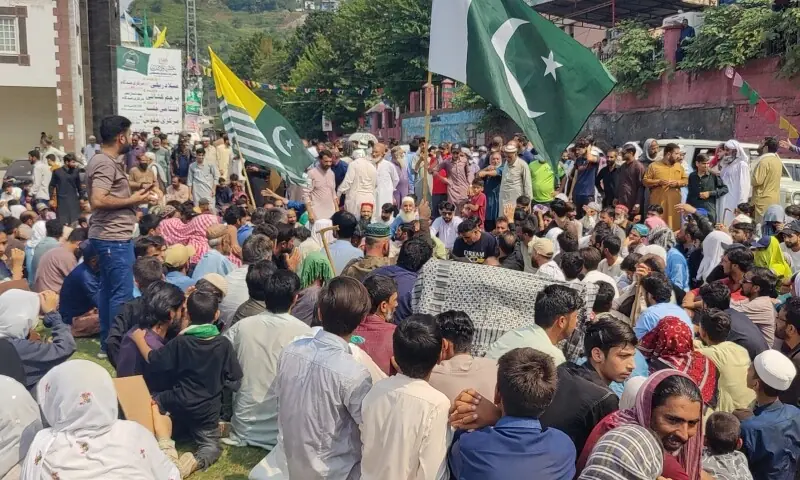
Protesters representing the post-1989 refugee community in Azad Jammu and Kashmir (AJK) have demanded that the AJK government present a clear roadmap by October 15 to resolve their issues, including resettlement. The demonstrators, organized by the Refugee Working Committee (RWC), called for an immediate increase in their subsistence allowance by Rs1,500 per person and the full implementation of all promises, including the restoration of a six percent job quota and a comprehensive financial package.
Speakers at the protest accused the AJK government of apathy and failure to address the community’s decades-old issues. RWC Chairman Uzair Ahmed Ghazali lamented that after 36 years, post-1989 migrants remain deprived of fundamental human, social, and political rights, stating that their status as landless and homeless in their own country is proof of the government’s failure.
Background of the Protest and Demands The RWC, a body formed in March 2024 to champion the cause of these refugees, began its protest with a sit-in at Burhan Wani Chowk and concluded with a rally. Other RWC leaders echoed similar sentiments, demanding that the migrants from Jammu and the Valley be granted full civic rights through domiciles and be allocated separate seats in the Legislative Assembly.
Over the past year, the RWC has met with top national leaders, including President Asif Ali Zardari and Prime Minister Shehbaz Sharif, to press their demands. On September 9, an RWC delegation also met with AJK Prime Minister Chaudhry Anwarul Haq, who requested two days to renew his request to the federal government for funds to raise the allowance.
According to AJK Rehabilitation Department officials, each refugee is entitled to a monthly subsistence allowance of Rs3,500, which is currently received by approximately 46,000 people from 8,601 families. The protesters warned that despair is growing among educated refugee youth due to a lack of opportunities, and urged the governments of AJK and Pakistan to take immediate and concrete measures to resolve their long-standing issues and allow them to live dignified lives.
