

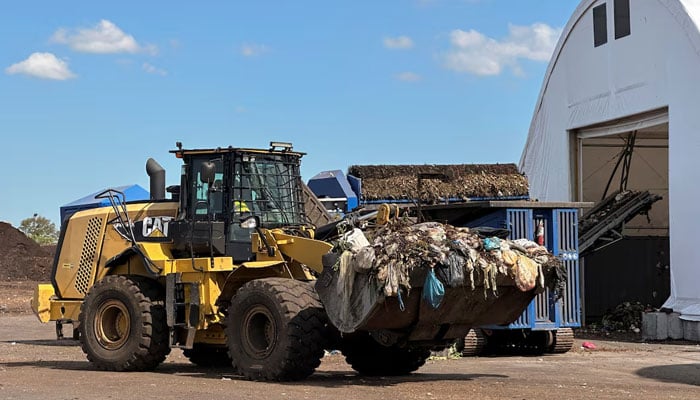
Watermelon rinds, greasy pizza boxes, and yard trimmings. In many cities, these items would go straight to a landfill. But in New York, they are the raw ingredients for something surprisingly valuable: “black gold.”
“We’re making this awesome compost that we can use throughout the city and improve soil health,” said Jennifer McDonnell, Deputy Commissioner for Solid Waste Management at the New York City Department of Sanitation.
The Staten Island Compost Facility, managed by Denali Water Solutions, has long processed landscaper waste—but it now also handles residential organic waste. On an average day, the facility takes in 100 to 150 tons of organic material, a number that goes up to 250 tons during heavy leaf fall.
Upon arrival, the waste is shredded, screened, and transferred into aerated static pile bunkers where composting begins. The piles heat up to over 100 degrees Fahrenheit (37.8°C), which is hot enough to kill pathogens and weed seeds.
Over several weeks, fungi, bacteria, and insects break down the material. After curing and screening, the final product forms a dark, nutrient-rich compost.
The city sells some of the compost to landscapers and distributes the rest free of charge to residents, schools, and community gardens.
“We’ve given out, we think, almost 6 million pounds of compost to the residents of New York City this year,” McDonnell said. The compost helps improve soil health, manage stormwater, and keep the city’s green spaces thriving.
According to the National Resources Defense Council, food scraps and yard waste are the largest share of household trash nationwide. When sent to landfills, they generate methane, a potent greenhouse gas.
“If we want to take a bite out of the climate crisis, we’ve got to get our food scraps out of landfills and into composting,” said Eric Goldstein, New York City Environment Director at the council.
The city’s organics collection program requires all residents to separate food scraps, food-soiled paper, and yard waste from their regular trash. While enforcement was paused earlier this year, it is expected to resume in 2026.
