

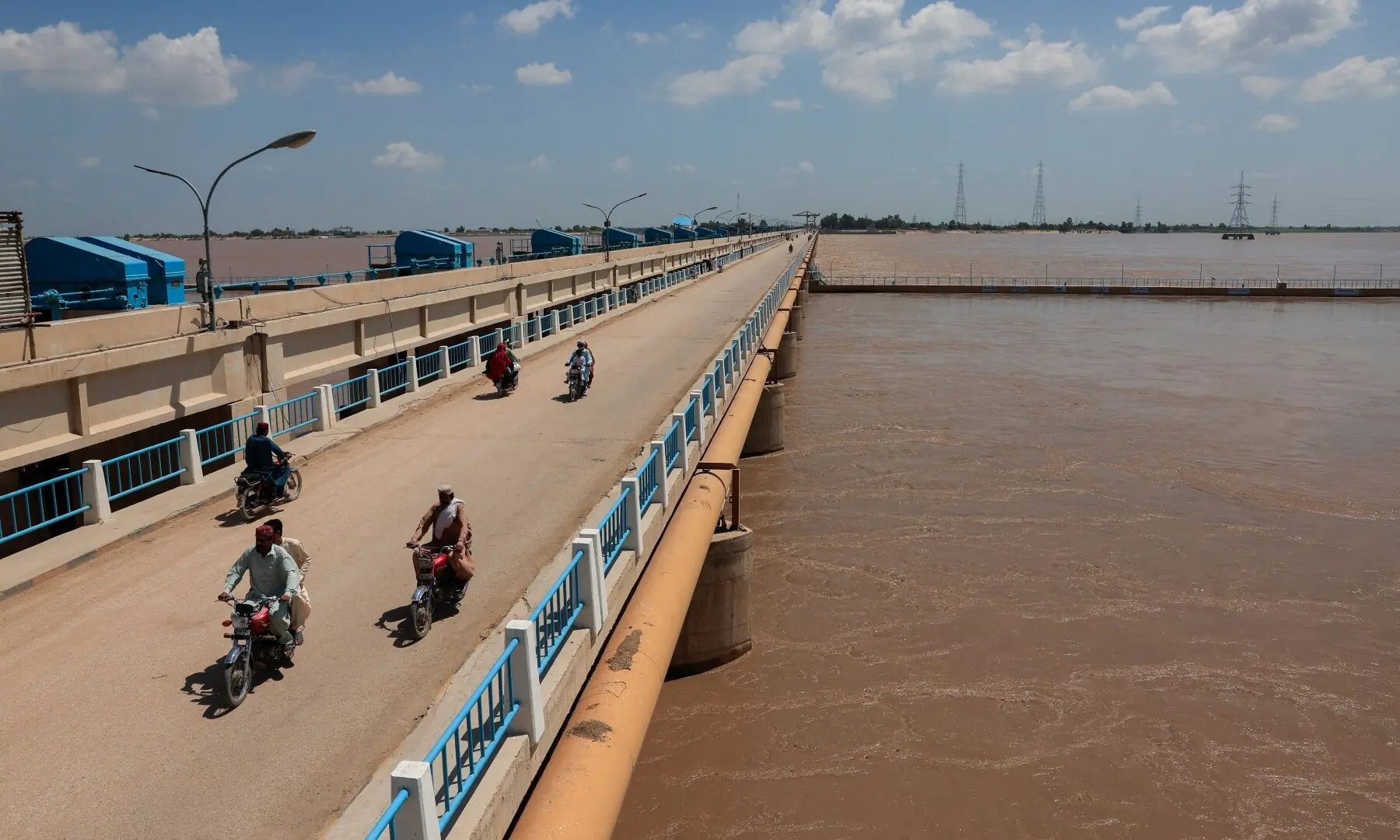
The recent floods, which began in Punjab and have now moved downstream to Sindh, have prompted the federal government to declare a climate change and agriculture emergency. This disaster has led to significant damage and raised concerns about economic stability and food security.
Scale of the Damage
- Punjab and KP: Official estimates report that in Punjab alone, 4.2 million people have been affected, 1.58 million animals have been lost, and over 4,400 villages have been inundated. Houses and farmland have also been destroyed in Gilgit-Baltistan and Khyber Pakhtunkhwa.
- Water Levels: Exceptionally high flood levels have been recorded at Panjnad Headworks on the Chenab River, with medium levels reported at Sindh’s Guddu and Sukkur barrages.
Impact on Supply Chains and Commerce
The floods have severely disrupted cargo movement and supply chains, particularly between Punjab and Sindh.
- Retail and E-commerce: The Chain Store Association of Pakistan (CSAP) reports that cargo movement is delayed by two to three days, affecting both retail and e-commerce deliveries. This has led to an increase in order cancellations.
- Contradictory Reports: While some associations report delays, others, such as the Transporters of Goods Association (TGA) and the Karachi Wholesalers Grocers Association (KWGA), maintain that the inter-provincial movement of goods and wholesale supplies remains unaffected. The Oil Companies Advisory Council (OCAC) also confirmed that there are no fuel shortages, as contingency routes are in place.
Threats to Agriculture and Food Security
The agricultural sector has borne the brunt of the floods, with significant losses to standing crops and future food security at risk.
- Crop Losses: The Fertiliser Manufacturers of Pakistan Advisory Council (FMPAC) stated that while fertilizer application was nearly complete for the kharif season, standing crops like rice, sugarcane, and vegetables have suffered extensive damage. About 1.5 million acres of farmland have been affected in Punjab and KP, with data from Sindh still pending.
- Future Risks: The FMPAC warned that farmers’ financial losses could prevent them from affording fertilizer for the upcoming wheat sowing season in October, threatening food security during the rabi season.
- Fruit and Vegetable Supplies: According to the All Pakistan Fruits and Vegetables Exporters, Importers and Merchants Association, supplies of onions and potatoes to Karachi have slowed. About 50% of Sindh’s onion crop has been damaged, and there are concerns about a potential $200 million loss in fruit and vegetable exports. The association is calling for tax waivers on imported vegetables and direct compensation for farmers.
Broader Economic and Financial Outlook
The State Bank of Pakistan (SBP) acknowledged the potential economic risks from the floods. In its report, it cautioned that while overall banking soundness is expected to remain stable due to strong capital buffers, the repayment capacity of agricultural borrowers could weaken. The SBP highlighted that despite the floods, a stable exchange rate and improved credit ratings could still support economic recovery.
