

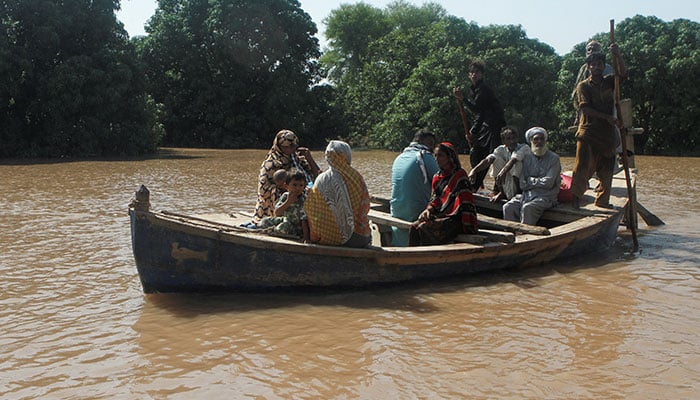
The International Monetary Fund (IMF) expressed its deep condolences on Saturday for the loss of life caused by Pakistan’s devastating floods. A senior IMF official stated that the upcoming Extended Fund Facility (EFF) review mission will evaluate whether the country’s fiscal policies and emergency provisions can effectively address the crisis.
“The mission will assess whether the FY26 budget, its spending allocations and emergency provisions remain sufficiently agile to address the spending needs necessitated by the floods,” said Mahir Binici, the IMF’s resident representative in Pakistan.
According to Pakistan’s National Disaster Management Authority, the flash floods have killed 972 people so far.
The floods have destroyed crops, livestock, and homes across Punjab province and are now moving into Sindh, threatening fresh food inflation and deeper hardship for the cash-strapped South Asian nation.
A Reuters poll indicates that Pakistan’s central bank is expected to keep its key rate at 11% on Monday. This decision comes as policymakers weigh inflation risks from crop losses against a slowing economy. An analyst estimated that the agricultural damage could shave up to 0.2 percentage points off economic growth this year, with reconstruction-led demand offering only a partial offset.
The IMF’s board approved a fresh $1.4 billion loan in May to help Pakistan strengthen its economic resilience to climate vulnerabilities and natural disasters. The disbursement of these funds is contingent upon the successful completion of reviews under the EFF, the official said.
The Global Climate Risk Index places Pakistan among the countries most vulnerable to climate change.
Meanwhile, a report from The News indicates that an IMF mission is scheduled to visit Pakistan on September 25 for the second review talks under the $7 billion EFF.
Due to the devastating floods, the country’s macroeconomic framework for the current fiscal year may need to be revised downward. This includes real GDP growth, CPI-based inflation, monetary policy, exports, imports, and tax revenues.
The GDP growth rate is likely to be revised downward from 4.2% due to the severe impact on the agricultural sector and a possible escalation in inflationary pressures caused by disruptions in the food supply chain.
The trade deficit had already widened before the floods. The implementation of Agriculture Income Tax (AIT) will also be discussed in detail, as the IMF will seek information about its potential for collection.
CPI-based inflation might rise beyond the targeted 5% to 7% for the current fiscal year. The export sector may also see a dip, especially in rice exports, while imports are expected to surge due to the damage to the farm sector caused by the floods.
