

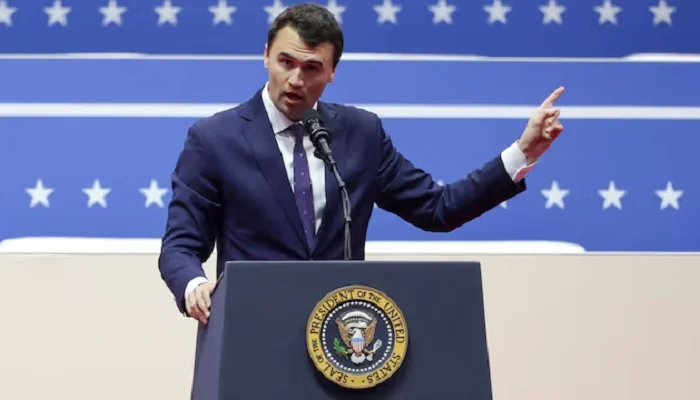
On Wednesday, Charlie Kirk, a prominent right-wing activist and an ally of President Donald Trump, was fatally shot while speaking at an event at a Utah university. The governor of Utah, Spencer Cox, described the shooting as a “political assassination.” Authorities have not yet publicly identified a suspect, though conflicting reports emerged about whether a person was detained and later released. The shooting, captured on video, shows Kirk being shot in the neck while addressing a crowd of about 3,000 people.
The incident is the latest in a series of attacks on U.S. political figures, which has highlighted a sharp rise in political violence across the country. According to a Reuters analysis, there have been more than 300 cases of politically motivated violent acts since supporters of President Trump attacked the U.S. Capitol on January 6, 2021. This marks the most sustained period of such violence since the 1970s.
Data on Political Violence by Ideology:
- Right-wing Extremism: A study by the Center for Strategic and International Studies (CSIS) analyzing 893 domestic terrorism incidents from 1994 to 2020 found that right-wing extremists were responsible for 411 of these incidents. Another study from the same period found that right-wing attacks and plots accounted for over 90% of incidents between January and May 2020. This ideology is also responsible for the majority of domestic terrorism incidents, constituting approximately two-thirds of such incidents.
- Left-wing Extremism: The same CSIS study found that left-wing extremists were responsible for 219 incidents from 1994 to 2020. While a 2022 study found that individuals and attacks associated with left-wing causes are less likely to be violent, other research suggests a recent increase in plots by anarchists, anti-fascists, and other left-wing extremists.
- Other Ideologies: Religious extremists, particularly those inspired by the Islamic State and al-Qaeda, have also been a source of political violence. From 1994 to 2019, religious terrorism caused the most fatalities due to the impact of the 9/11 attacks, which resulted in 2,977 deaths.
The motivations for these acts are complex and often a mix of different factors. Experts cite economic insecurity, anxiety over demographic changes, and increasingly inflammatory political rhetoric as contributing to the rise in violence.
