

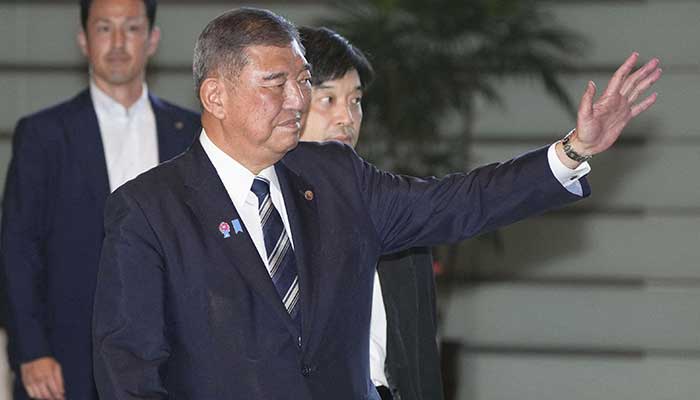
Japanese Prime Minister Shigeru Ishiba announced on Sunday that he has decided to resign, a move that could lead to a period of political uncertainty for the world’s fourth-largest economy. Ishiba, 68, instructed his Liberal Democratic Party (LDP)—which has governed Japan for most of the post-war era—to hold an emergency leadership race. He will continue his duties until a successor is elected.
Reasons for Resignation
Since taking office less than a year ago, Ishiba’s ruling coalition has lost its majorities in both houses of parliament, largely due to voter anger over rising living costs. He had previously resisted calls to step down, focusing instead on finalizing a trade deal with the United States on tariffs imposed by President Donald Trump. “With Japan having signed the trade agreement and the president having signed the executive order, we have passed a key hurdle,” Ishiba said, adding, “I would like to pass the baton to the next generation.”
Potential Successors and Political Outlook
The political uncertainty has already led to a sell-off of Japan’s yen and government bonds. Markets are now focusing on the possibility of Ishiba being replaced by someone who favors a looser fiscal and monetary policy, such as LDP veteran Sanae Takaichi, who has criticized the Bank of Japan’s interest rate hikes. Ishiba narrowly defeated Takaichi in last year’s LDP leadership runoff. Shinjiro Koizumi, the current farm minister and a popular figure, is also a possible successor.
According to economist Kazutaka Maeda, Ishiba’s resignation was inevitable given the mounting political pressure. While Koizumi is not expected to bring major changes, Takaichi’s stance on expansionary fiscal policy and her cautious approach to interest rates could draw scrutiny from financial markets. As the LDP no longer holds a majority in either house of parliament, the next LDP president is not guaranteed to become prime minister. Analysts suggest the new leader may choose to call a snap election to seek a new mandate.
