

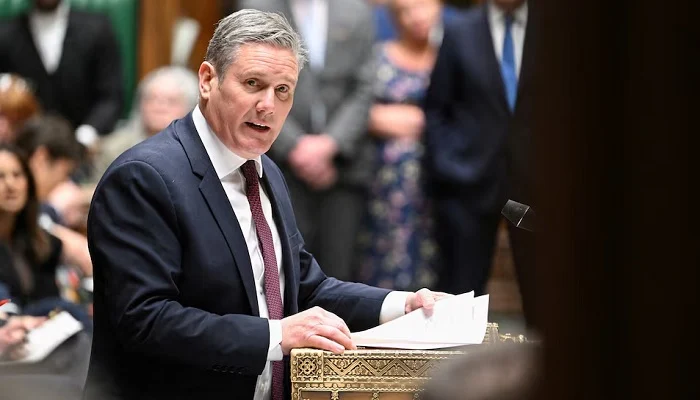
British Prime Minister Keir Starmer has initiated a major cabinet reshuffle, appointing a new deputy, foreign, and interior ministers on Friday in a move intended to restore his authority following the resignation of his deputy, Angela Rayner.
As part of the reshuffle, Foreign Minister David Lammy was moved to become deputy prime minister, and he was replaced by Interior Minister Yvette Cooper. Cooper, in turn, was replaced by Justice Secretary Shabana Mahmood. All three are considered loyal and trusted allies of Starmer.
Key Appointments and Political Context
A reshuffle had been expected after Starmer previously restructured his Downing Street team to bolster his economic advisory, but Rayner’s departure made it far deeper than anticipated. This forced Starmer to put an end to more than a week of distracting speculation over her tax affairs.
Starmer’s hands were tied after Britain’s independent adviser ruled that Rayner had breached the ministerial code by failing to pay the correct tax. A Labour lawmaker commented that “Angela is a ‘big beast’ and hard to replace,” adding that the three new appointments were “sound” if not overly exciting.
- David Lammy, while elevated to deputy prime minister, has been forced to hand over the highly sought-after role of foreign secretary and will now replace Mahmood as justice secretary.
- Yvette Cooper is one of Labour’s most senior figures, having served under former Prime Minister Gordon Brown. Her appointment is seen as a promotion after overseeing the government’s often-criticized policy to tackle illegal migration.
- Shabana Mahmood, 44, is also seen as a “safe pair of hands” in Labour, a no-nonsense politician who has not been afraid to take bold action while running the justice system.
Loyalty is seen as vital for Starmer, who has faced more ministerial resignations—outside of government reshuffles—than any prime minister at the beginning of their tenure in almost 50 years. Chris Hopkins, a political research director at polling firm Savanta, told Reuters, “There is a sense at the moment that they don’t know what they are doing and what they stand for.”
Rayner’s Resignation and Aftermath
Rayner, 45, was the eighth—and most senior—ministerial departure from Starmer’s team, and the most damaging yet. This came after Starmer had initially offered his support when she was first accused of avoiding £40,000 ($54,000) in tax. In her resignation letter, Rayner apologized to Starmer, stating, “I deeply regret my decision to not seek additional specialist tax advice.”
She also stepped down as a minister and as deputy party leader, a position that Lammy is now in pole position for. The independent adviser on ministerial standards ruled that Rayner had broken the ministerial code because she failed to heed a warning in legal advice, which she had relied on to seek expert advice on her complicated financial situation.
Rayner’s resignation has put more pressure on Starmer, with Labour now trailing Nigel Farage’s populist Reform UK in the polls. Starmer faces difficult state spending and tax choices as he tries to repair his center-left party’s image. They have also come under fire for accepting expensive items, including clothing and concert tickets from donors, before being forced to water down cuts to the welfare budget.
On the first day of Reform’s party conference in Birmingham, Farage moved his speech forward by three hours to address Rayner’s resignation. He said the Labour government was in “deep crisis” and suggested the next election might take place in 2027, implying that Labour, which has a large majority and does not need to call an election until 2029, may find itself unable to govern. “Despite all the promises that this would be a new, different type of politics, it is as bad, if not worse, than the one that went before,” he told the audience to loud applause.
Rayner had registered a new home in Hove as her primary residence after selling her share of her family home in northern England to a trust set up for one of her sons, who has lifelong disabilities. She said she had believed she would not have to pay the higher rate of tax charged when buying a second home. After media reports drew attention to the potential tax avoidance, she sought further legal advice and acknowledged her mistake, stating she would pay the additional tax.
