

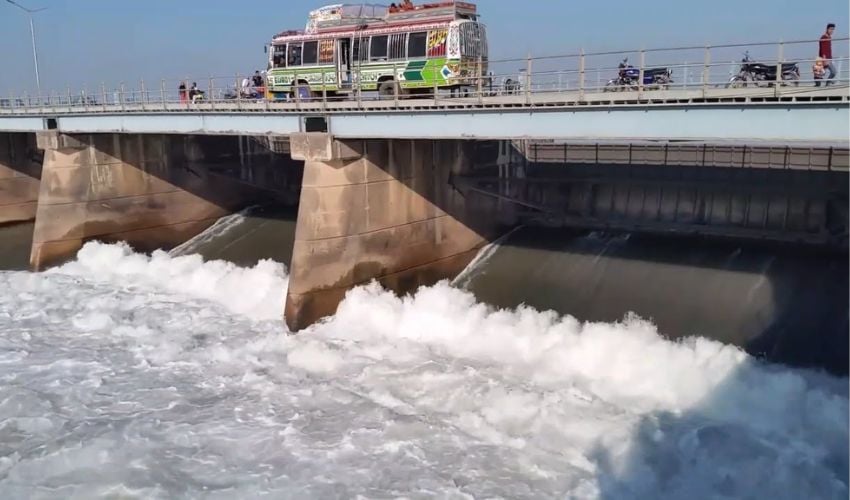
Irfan Ali Kathia, the Director General of PDMA Punjab, has warned that Punjab is confronting one of the biggest floods in its history as water levels in major rivers continue to rise, posing serious risks to downstream regions.
According to Irfan Ali Kathia, water from the Chenab at Qadirabad is expected to re-enter already affected areas, and the situation in Jhang will worsen as the floodwaters advance. Water inflows are increasing at Head Trimmu, while the Sutlej River has been in a state of high flood for the past two months.
At Ganda Singh, flows of over 319,000 cusecs are being recorded. “The situation at Ravi remains challenging,” Kathia said, noting that the river’s flow has increased at Jassar and that water from Indian dams—which are already at capacity—could be released within the next 24 hours.
He explained that water pressure at Sher Shah is extremely high, and the flows from the Sutlej and Ravi are complicating the situation. “The Chenab’s flow is stronger than the Ravi’s, which is why the Ravi’s water is not merging into the Chenab at Sadhnai. This will continue until the Chenab’s levels drop,” he said.
Kathia confirmed that authorities were forced to breach the Safuran embankment last night, which flooded villages in Kabirwala, Pir Mahal, and Ahmadpur Sial. “Decisions regarding Head Muhammad Wala have been made, and efforts are underway to protect the surrounding villages,” he added.
By September 5, floodwaters from the three rivers are expected to converge at Panjnad, and between the night of September 6 and 7, a flow of around 900,000 cusecs will enter Sindh. “This is the biggest flood in Punjab’s history,” Kathia warned, urging continuous vigilance and a coordinated response.
