

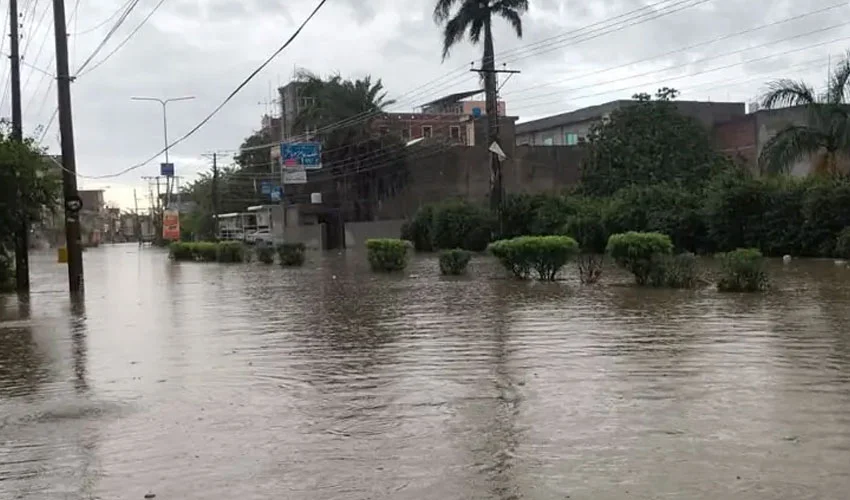
Record-breaking torrential rains, measuring a staggering 526 millimetres, have wreaked havoc across Gujrat, leaving roads, homes, and commercial centers submerged. Floodwaters have inundated major city markets and residential areas, bringing daily life to a standstill and causing significant financial losses for traders.
Six rainwater drains on the city’s outskirts overflowed, first flooding nearby villages before their waters surged into Gujrat city. Commercial hubs, including Kachhari Chowk, Court Road, and Muslim Bazaar, were submerged, forcing traders to scramble late at night to move their valuables without any assistance from authorities. “Neither the district administration nor the municipal staff were anywhere to be seen while we struggled to save our goods,” one trader stated.
Many shopkeepers expressed outrage, calling the situation “criminal negligence” and demanding prompt action from the Punjab chief minister. Floodwaters also entered homes in several neighbourhoods, damaging household items and cutting off access to essential facilities. Citizens complained that their stoves had “gone cold,” as cooking became impossible with kitchens submerged in standing water.
Compounding the crisis, rainwater breached the premises of the district jail and sessions court, necessitating the transfer of inmates to prisons in Lahore and Gujranwala.
Schools Closed, Buildings Collapse
Authorities announced that all educational institutions across the district would remain closed, as machinery was being brought in from Gujranwala to assist with draining the water. In Jalalpur Jattan, a two-storey vacant building collapsed after its foundations were weakened by the flood, though no casualties were reported. The Gujranwala Commissioner stated that a protective dam was being constructed near Madina Syedan to divert water into a storm drain, and heavy machinery had been deployed for clearance efforts.
Ongoing Flood Threat
Meanwhile, a second major flood wave in the Chenab River is advancing towards Head Trimmu, raising fears of further inundation in Punjab’s low-lying areas. Officials are concerned that if river levels continue to rise, the impact could extend well beyond Gujrat.
Recent Trend of Extreme Rainfall
Earlier, on August 27, Sialkot had recorded 355mm of rainfall in a single spell, which left streets and neighbourhoods submerged for several days. Experts warn that such extreme downpours are becoming more frequent due to climate change. Pakistan remains one of the countries most vulnerable to floods, earthquakes, and landslides triggered by shifting weather patterns.
