

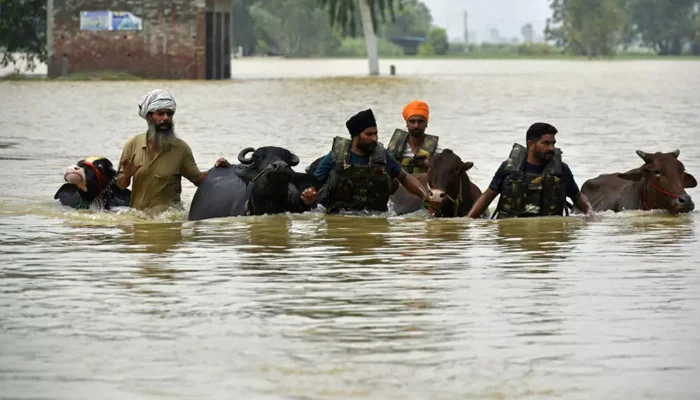
In India’s Punjab state, a thousand villages have been marooned by deadly floods, with thousands of residents forced to seek shelter in relief camps, according to government authorities. The flooding across the northwestern state killed at least 29 people and affected over 250,000 last month, with the state’s chief minister calling it “one of the worst flood disasters in decades.”
The region is often called India’s breadbasket, but more than 940 square kilometers (360 square miles) of farmland are flooded, leading to “devastating crop losses,” Punjab’s Chief Minister Bhagwant Mann wrote in a letter to Prime Minister Narendra Modi. On Monday, Modi assured him of the federal government’s “full support.” Authorities have said they fear a “huge loss of livestock,” the full extent of which will only become clear when the waters recede, according to a bulletin issued by state authorities late Monday.
India’s army and disaster teams have conducted vast rescue operations, deploying more than 1,000 boats and 30 helicopters to rescue those stranded or supply them with food. “The most important thing is to save the lives of people and helpless animals trapped in the water,” Mann said in a statement. Rivers in the region also cross into Pakistan, where floodwater has engulfed swathes of land.
Floods and landslides are common during the June-September monsoon season on the subcontinent, but experts say climate change, combined with poorly planned development, is increasing their frequency, severity, and impact. According to the national weather department, northwest India has seen rainfall surge by more than a third on average from June to September. In the capital, Delhi, relentless rains have swollen the Yamuna river—which breached its danger mark on Tuesday, inundating several areas and causing traffic jams that lasted for hours. Last month, deadly floods triggered by record-breaking rain also killed dozens in India’s Jammu and Kashmir region.
