

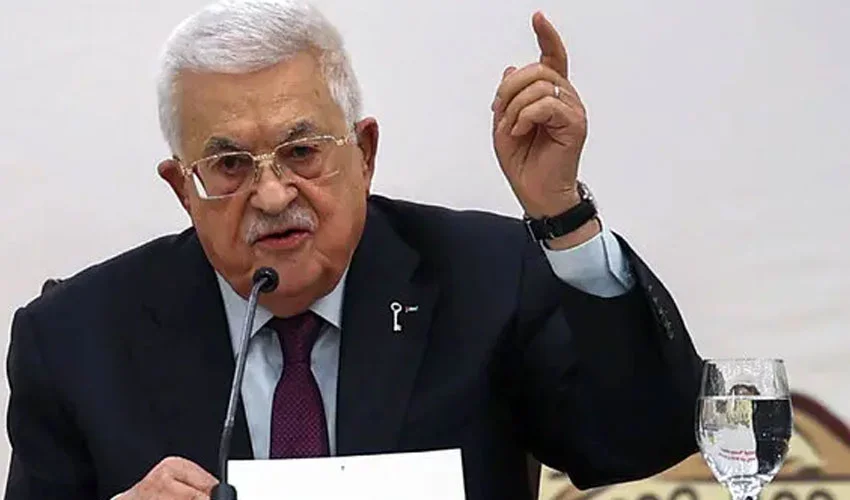
The United States has barred Palestinian President Mahmoud Abbas from attending next month’s UN General Assembly by revoking his visa, along with those of about 80 other Palestinian officials. The move, confirmed by the US State Department, has been met with sharp criticism from the Palestinian Authority and has raised questions about Washington’s compliance with international law.
Reasons and Legal Concerns
US Secretary of State Marco Rubio said the decision was made because Palestinian officials were undermining peace efforts and seeking “unilateral recognition of a conjectural Palestinian state.” The ban comes as France, with support from the UK, Canada, and Australia, leads a campaign to recognize Palestine at the UN session—a step that the Trump administration strongly opposes.
The UN Headquarters Agreement, which governs the presence of foreign officials in New York, states that the US must not restrict attendance “irrespective of the relations” it has with governments. UN spokesman Stephane Dujarric confirmed that discussions are underway with the State Department to resolve the matter, emphasizing the importance of all members and observers being represented.
Palestinian Response and Israeli Support
Abbas’s office condemned the move as a “clear contradiction to international law and the UN Headquarters Agreement.” Palestinian Ambassador Riyad Mansour stated that Abbas had been scheduled to lead the delegation at the summit of world leaders.
Israel, however, has welcomed the decision. Foreign Minister Gideon Saar praised Washington’s stance, while Prime Minister Benjamin Netanyahu reiterated his rejection of a two-state solution, calling recognition of Palestine “a reward for Hamas’s monstrous terrorism.”
Escalating Regional Tensions
The move comes amid the ongoing war in Gaza, where over 63,000 people have been killed since Israel’s offensive began following the Hamas-led October 7 attack that killed 1,200 people in Israel. The Palestinian Authority, led by Abbas, governs parts of the West Bank but has struggled to maintain control due to Israeli settlement expansion and internal divisions with Hamas, which rules Gaza.
The US has allowed Palestinian representatives already stationed at the UN mission in New York to attend meetings. However, the exclusion of Abbas and senior officials could undermine Palestinian participation in critical discussions, including a planned high-level meeting on the two-state solution co-chaired by France and Saudi Arabia.
