

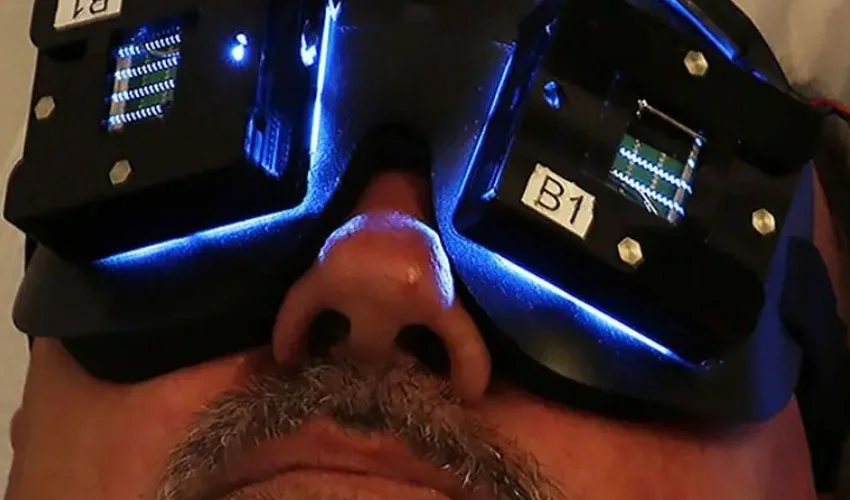
A new study suggests that light therapy may significantly improve memory, attention, and communication in Alzheimer’s patients. This breakthrough offers fresh hope for millions living with the disease.
Researchers from the Technical University of Denmark (DTU) and the University of California, Berkeley have developed a gentle light technology that stimulates gamma brain waves, which are linked to improved brain function. The therapy is designed to be delivered through a simple lamp, making it easy for patients to use at home as a preventive or supportive treatment.
Positive Results in Early Trials
Clinical trials at Zealand University Hospital in Denmark showed encouraging outcomes. Alzheimer’s patients who received 30 minutes of light therapy daily for six to twelve weeks demonstrated improvements in memory, communication, and overall cognitive ability. In these double-blind trials, neither patients nor doctors knew which therapy was being administered. The results indicated measurable benefits for those who received the new light treatment.
From Lab to Patient Care
The concept was inspired by earlier MIT research, where exposing mice to bright light generated gamma brain waves and reduced harmful brain plaques associated with Alzheimer’s. Professor Paul Michael Petersen, who helped develop the technology, explained that while bright light can sometimes be uncomfortable, this new method uses a softer, safer form of light, making it suitable for patients.
The research suggests that this light therapy could one day be available as a common household lamp, making treatment more accessible. While further studies are needed, experts believe the technology could play an important role in both the prevention and therapy of Alzheimer’s.
