

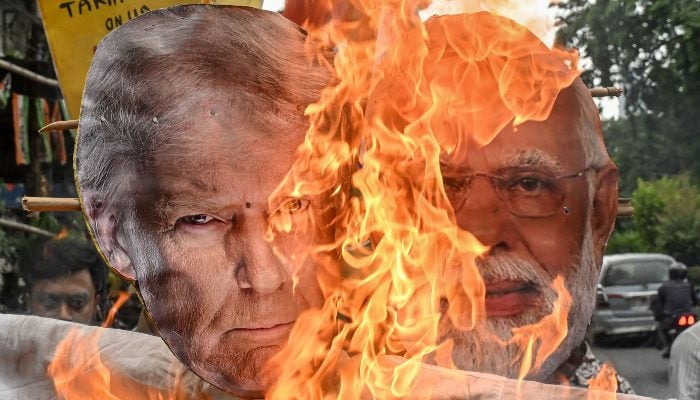
This week, Indian exports to the United States will face some of the highest tariffs in the world, a move that could have major consequences for India’s economy and U.S.-India relations. President Donald Trump has linked trade to geopolitics, threatening a 50% tariff on Indian goods in retaliation for New Delhi’s continued purchase of Russian oil, which Washington says helps finance Moscow’s war in Ukraine.
The Economic Impact on India
The tariffs, which took effect on August 27, are expected to significantly impact India’s economy. The United States was India’s top export destination in 2024, with exports valued at $87.3 billion. Analysts at Nomura have called the 50% duties “akin to a trade embargo,” and Elara Securities’ Garima Kapoor stated that no Indian product could maintain a “competitive edge” under such heavy taxes.
Economists predict the tariffs could cut 70 to 100 basis points off India’s GDP growth this fiscal year, bringing growth below 6%, the weakest pace since the pandemic. Labor-intensive sectors like textiles, seafood, and jewelry are already reporting canceled U.S. orders and are losing ground to rivals in Bangladesh and Vietnam, raising fears of widespread job cuts.
A few sectors, including pharmaceuticals and electronics, such as iPhones assembled in India, are currently exempt. S&P estimates that while the tariffs will hit exports equivalent to 1.2% of India’s GDP, it will be a “one-off” shock that “will not derail” the country’s long-term growth prospects.
Diplomatic Standoff
The core issue remains the purchase of Russian oil. White House trade adviser Peter Navarro accused India of acting as a “global clearinghouse for Russian oil,” converting crude into high-value exports and providing Moscow with the funds it needs.
India’s Foreign Minister, Subrahmanyam Jaishankar, has pushed back forcefully, stating that India’s oil purchases have helped stabilize global oil markets and were made with Washington’s tacit approval in 2022. He also pointed out that both the United States and Europe continue to buy refined oil products from India. “If you have a problem buying oil from India… don’t buy it,” he said.
India’s Response and Future Outlook
Facing this “no-win situation,” India has been looking for ways to bolster its position. Foreign Minister Jaishankar has traveled to Moscow to ease trade barriers, and Prime Minister Narendra Modi is planning his first visit to China in seven years to repair strained relations. Domestically, the government is reportedly preparing a $2.8 billion package for exporters to address liquidity concerns and has proposed tax cuts to stimulate the economy.
Trade talks between the U.S. and India have stalled, particularly over agriculture and dairy, with Trump seeking greater market access and Modi determined to protect Indian farmers. While U.S. negotiators reportedly canceled a planned trip, Jaishankar maintains that talks are still ongoing.
The coming weeks will reveal the true extent of the tariffs’ impact and whether either side is willing to change course.
