

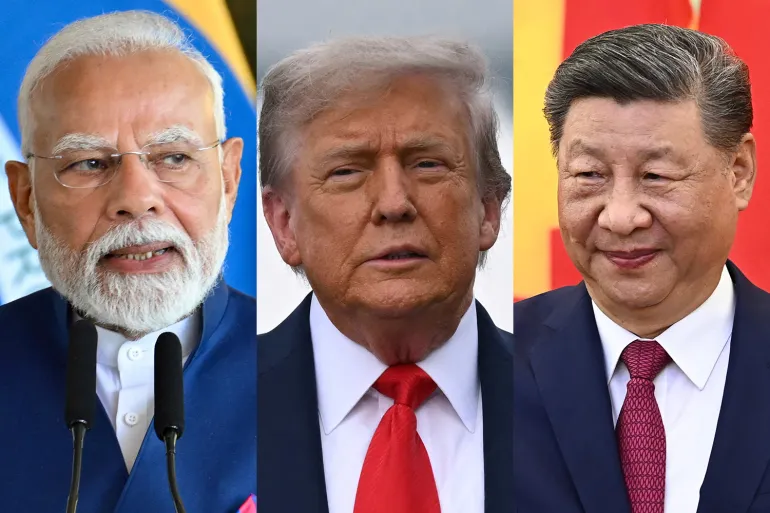
The Trump administration has been pressuring India to stop buying Russian oil while taking little action against China. What are the reasons behind this discrepancy?
Who is purchasing Russian oil and what is Trump’s plan? Last year, China imported a record 109 million tonnes of Russian oil, which constituted nearly 20% of its total energy imports, making it the largest purchaser. In contrast, India imported 88 million tonnes in 2024. China is thus considered a crucial economic lifeline for Russia, leading to accusations that Beijing is indirectly supporting Moscow’s war in Ukraine.
Lawmakers from both major US political parties are advocating for a bill, the “Sanctioning Russia Act of 2025,” which would target any nation purchasing Russian oil and natural gas. This bill would grant Trump the authority to impose tariffs of up to 500% on countries seen as assisting Russia. US senators are awaiting Trump’s approval to move the bill forward.
What justifications has Trump given for not imposing new tariffs on China? When asked by Fox News on August 15 if he was considering secondary sanctions on Beijing, Trump responded that he didn’t need to think about it at that moment, but might “in two or three weeks.” Observers believe Trump is buying time to negotiate a broader trade deal, which would include rare earth minerals.
Rare earths are a group of 17 elements vital for various manufacturing industries, from car parts to military technology. China has a long-standing dominance in the mining and processing of these minerals. Given the US reliance on Chinese minerals, this remains a key factor in the ongoing trade discussions.
Another reason for Trump’s more lenient approach to China is his desire to avoid a tariff increase right before the December Christmas holiday season, when US retailers are stocking up on Chinese goods.
Recently, Trump has taken steps to de-escalate trade tensions, such as easing some export restrictions on advanced semiconductors, a significant request from China.
Statements from Other Officials US Vice President JD Vance noted that the “China issue’s a little bit more complicated” because the relationship between the two countries affects many things beyond the Russian situation. US Secretary of State Marco Rubio warned that imposing secondary sanctions on China could lead to a rise in global energy prices, as China refines Russian oil and sells it on the international market.
US Treasury Secretary Scott Bessent defended the decision not to impose secondary sanctions on China, stating that its share of Russian oil imports had only increased slightly since the war. He, however, accused India of “profiteering,” pointing out that its imports of Russian oil had surged from less than 1% before the war to 42%, making an estimated $16 billion in “excess profits.”
Economic Implications A ceasefire in Ukraine and a subsequent reduction of sanctions on Russia would bring more stability to the global system and benefit China’s economy, especially after its recent subdued economic data.
