

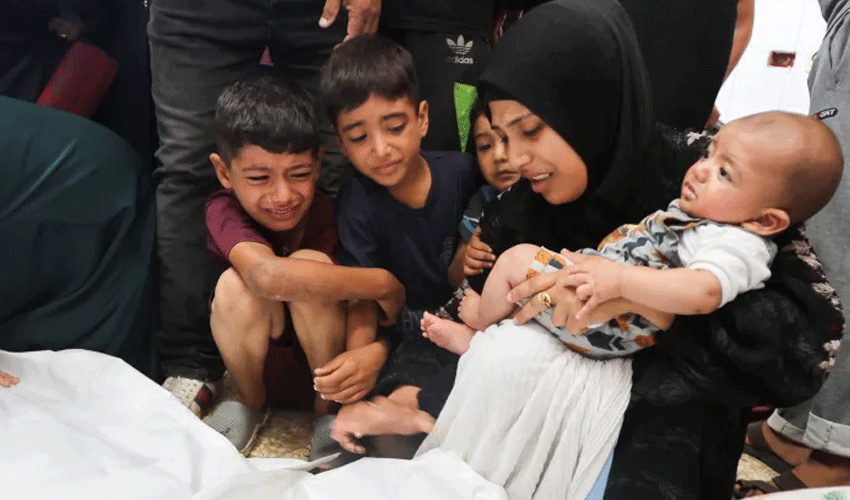
Israel has escalated its assault on Gaza’s main urban center, with relentless bombardments and forced starvation contributing to the deaths of more than 62,000 Palestinians since the war began nearly two years ago, according to Gaza’s Health Ministry.
Israeli forces are intensifying their military campaign in Gaza City, using heavy artillery, drones, and fighter jets to destroy residential areas. On Monday alone, at least 30 Palestinians were killed, including 14 people who were struck while seeking food aid.
Among the victims was journalist Islam al-Koumi, who died in an airstrike on the al-Sabra neighborhood. Local sources report widespread displacement as families flee their bombed-out homes, while others remain trapped due to poverty or fear.
Al Jazeera correspondent Tareq Abu Azzoum described the devastation as “extremely overwhelming,” stating, “We can see how Israel is using heavy artillery, fighter jets and drones, in order to destroy what’s left of residential homes.”
Trapped Civilians Amidst Displacement
Many Palestinians in Gaza City say that moving south is impossible. Displaced resident Bilal Abu Sitta explained, “How am I supposed to even get there? I need nearly $900 to move – I don’t even have a dollar.”
Others refuse to trust Israeli assurances of safety. “We don’t want Israel to give us anything,” said Noaman Hamad. “We want them to allow us back to the homes we fled.”
Healthcare centers in Gaza City have also been targeted, worsening the humanitarian crisis for families sheltering in ruins, makeshift tents, or overcrowded classrooms.
Starvation Used as a Weapon of War
Gaza’s Health Ministry confirmed that five more Palestinians, including two children, died from malnutrition in the last 24 hours. This raises the total number of starvation-related deaths to 263 people, including 112 children.
The World Food Programme (WFP) has warned that more than 320,000 children under the age of five in Gaza are at risk of acute malnutrition. Families are surviving on meager, low-nutritional-value rations, while aid agencies emphasize the urgent need for a ceasefire to facilitate large-scale food deliveries.
UNRWA noted that instead of preparing for school, Gaza’s children are now queuing for food, searching for clean water, and living in overcrowded shelters.
Amid the destruction, a glimmer of hope for relief emerged as Hamas signaled its approval of a ceasefire proposal brokered by Qatar and Egypt. According to an informed source, the draft deal would establish a 60-day truce, include the release of half of the Israeli captives held in Gaza, and secure the freedom of an unspecified number of Palestinians imprisoned in Israel.
