

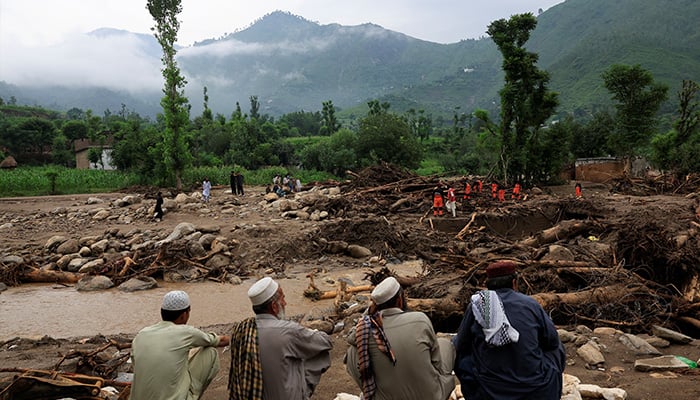
Pakistan is currently grappling with one of the most lethal monsoon seasons in its recent history, as incessant downpours and raging floodwaters have submerged vast areas of the nation. The National Disaster Management Authority (NDMA) reports that at least 657 people have lost their lives and over 920 have been injured since June 26, as communities continue to be ravaged by cloudbursts, flash floods, collapsing homes, and lightning strikes.
Khyber Pakhtunkhwa (KP) has been the hardest-hit province, with remote mountainous regions like Buner becoming the focal point of the devastation. Rescue efforts are ongoing, and officials from Rescue 1122 have recovered 373 bodies from flood-affected areas across the province, with the majority from Buner.
Fresh rains on Monday exacerbated the dire situation for millions. Cities and suburbs in Mardan, Nowshera, and Swat were hit by heavy rainfall, bringing life to a standstill. In Buner, relief operations were hindered as a temporary bridge connecting an isolated village was on the verge of collapsing. In Peshawar, severe urban flooding turned streets into rivers, paralyzing traffic and submerging vehicles.
Rising Toll and Strained Waterways
Due to the intense rain, rivers and dams are under significant pressure. Flood warnings have been issued for the Indus River, with medium-level floods recorded at Kalabagh, Jinnah, and Chashma barrages. Tarbela Dam is now at 97% capacity, while Mangla Dam has reached 71%. The Pakistan Meteorological Department (PMD) forecasts more heavy rain and thunderstorms until August 19.
The nationwide death toll continues to climb, with children, women, and men among the deceased. Of the 657 confirmed deaths, 171 were children, 94 were women, and 392 were men. KP accounts for 390 deaths, while Punjab, Sindh, and Balochistan have also reported significant casualties. The NDMA is working with provincial authorities to accelerate relief and rescue efforts.
Lieutenant General Inam Haider, chairman of the NDMA, stated that this year’s monsoon intensity is 50-60% greater than last year. He warned that climate change, combined with human activities like building homes in floodplains and obstructing waterways, is amplifying the impact of these extreme weather events, which have become more frequent in a country highly vulnerable to climate shifts.
