

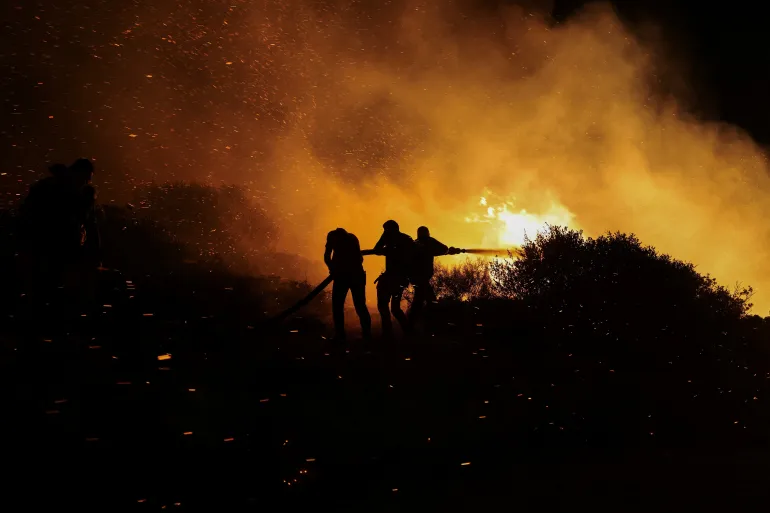
There are two primary reasons for the rise in wildfires: climate change and human activity. The changing climate is causing longer and more frequent heatwaves and droughts that dry out forests, providing an easy source of fuel. This creates a self-perpetuating cycle where fires emit carbon dioxide, further worsening the climate crisis. In 2024, fires emitted an estimated 6,199 megatonnes of carbon dioxide globally.
The second major cause is the way we live and use land. We are increasingly building closer to forests, which raises the risk of wildfires. Many of these fires are started by humans, either through carelessness or by clearing land for agriculture and new settlements. As urban infrastructure encroaches on natural areas, the danger to human lives and property from fire increases. The costs of these wildfires are immense, destroying homes, crops, businesses, and livelihoods, with a particularly devastating impact on developing countries.
The Dual Nature of Fire and Its Role in Ecosystems
However, not all fires are bad. Fire has been a part of the Earth’s ecosystem for millions of years and occurs naturally on every continent except Antarctica. It can be a vital tool for renewal, helping to clear away dead leaves and other debris on the forest floor, which adds nutrients back into the soil. This process allows new plants to grow, providing food for animals. For some plant species, fire is even necessary for their seeds to germinate.
Controlled fires, often set during cooler months, are a key method for preventing more destructive wildfires. For millennia, many Indigenous peoples have used prescribed burning as a land management technique. This practice helps to curb dangerous wildfires, encourages ecological diversity, and promotes new growth that attracts game animals for food. A recent study in Australia’s Kimberley region showed that the reintroduction of Indigenous burning practices reduced annual massive wildfires to once-a-decade events.
Proactive Strategies for Wildfire Prevention
Other preventative measures are also crucial, with community engagement being a core strategy. The practical knowledge and experience of local communities must be the foundation of integrated fire management strategies. Actively involving communities in decision-making and leveraging their local knowledge can build long-term resilience and reduce risks.
Another layer of defense is early-warning systems. By incorporating drought indices and traditional knowledge of weather patterns, these systems can predict fire-danger conditions and assist with planning well before wildfire season begins. Since some fires are inevitable, having better monitoring mechanisms to detect fires quickly and an effective firefighting capacity is essential to contain them before they become dangerous. This allows for suppression actions to take place before fires grow out of control.
Maintaining biodiversity and varied landscapes—instead of large, uniform, fire-prone areas—can also help reduce the risk of fire spreading. Ultimately, people must learn to live in harmony with nature. This means discouraging inappropriate development in fire-prone ecosystems, as new infrastructure built near wild spaces can be a central cause of wildfires. While these strategies may seem difficult, they require far fewer resources and save many more lives than fighting uncontrollable wildfires. With the right measures, humans and fire can coexist.
