

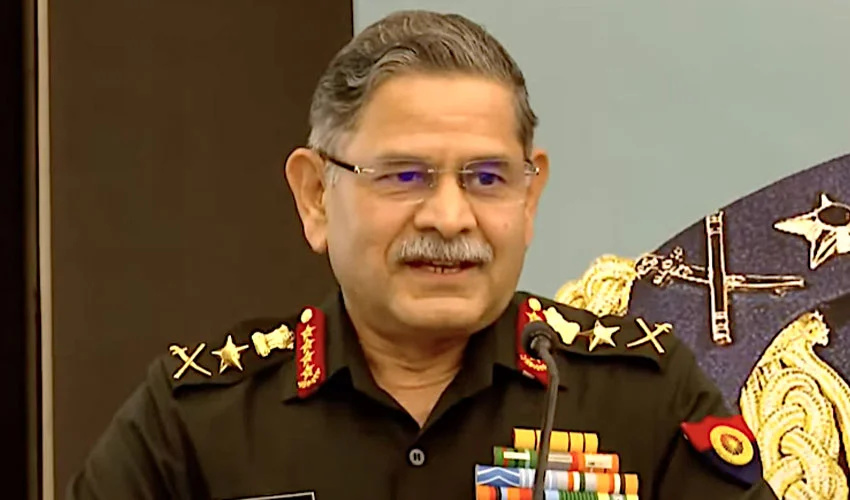
Indian Army Chief General Upendra Dwivedi has admitted that India launched Operation Sindoor against Pakistan without fully assessing the consequences, acknowledging that the country was unprepared for the scale of Pakistan’s retaliation.
Speaking about the operation in early May, Dwivedi likened the move to a “game of chess” in which India did not anticipate Pakistan’s destructive counterattack. “We did not know what to do, and we did not realize how destructive Pakistan’s response could be,” Dwivedi confessed.
Operation Sindoor involved Indian fighter jets carrying out airstrikes in several Pakistani cities, including Bahawalpur. However, Pakistan responded within hours, downing six Indian warplanes—including advanced Rafale jets—and targeting strategic military sites in India.
Pakistan’s Swift Retaliation
On May 10, Pakistan’s armed forces struck Indian air bases, missile depots, and other installations using Fatah missiles. The strikes caused significant damage, forcing India to seek US mediation through then-President Donald Trump to de-escalate the conflict.
Pakistan had earlier vowed a “befitting response” to any act of aggression. The DG ISPR and Air Vice Marshal Aurangzeb later released digital evidence of India’s aircraft losses, while Indian officials have remained vague about the scale of their own damages.
While the Indian Air Chief recently claimed that six Pakistani aircraft were shot down during the conflict, no proof has been presented. In contrast, Pakistan maintains it downed five Indian aircraft on just the second day of the war, leading to what its air force called a “0-6 score” in their favor by the end of hostilities.
