

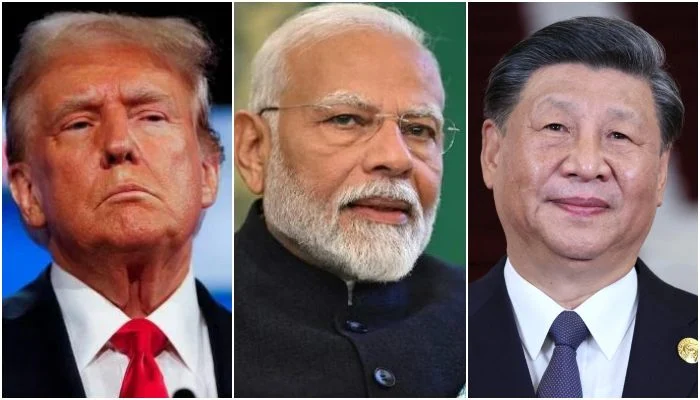
Indian Prime Minister Narendra Modi’s high-profile attempts to build strong relationships with major global powers have reportedly been met with significant challenges, as his outreach to both Chinese President Xi Jinping and US President Donald Trump has resulted in political embarrassment and raised questions about India’s international influence, according to a report in The New York Times.
Modi’s initial major diplomatic move was an attempt to forge a strong bond with China. In 2014, he gave Xi Jinping a grand welcome in Gujarat, but even as they met, Chinese troops clashed with Indian forces along the disputed border. This was the first of many such confrontations, which would force India to maintain a large military presence in the Himalayas for years. Later, Modi shifted his focus to the United States, viewing it as a counterweight to China. He invested heavily in this relationship, even breaking protocol to campaign for Trump’s re-election at a rally in Houston.
However, the goodwill built up during this period quickly dissolved in Trump’s second term. The US president imposed a 50% tariff on India, referred to its economy as “dead,” and criticized its purchases of Russian oil. Trump also angered New Delhi by granting Pakistan equal standing in mediating a ceasefire following this year’s cross-border hostilities, a claim which India publicly disputed to protect Modi’s image as a strong leader.
This diplomatic friction has led India to revert to its traditional policy of “strategic autonomy,” which involves avoiding deep alliances and instead relying on a complex mix of partnerships. Modi has since reopened channels with Beijing, despite unresolved border issues, and has also strengthened engagement with Moscow, speaking with President Vladimir Putin to reaffirm their “Special and Privileged Strategic Partnership.” Experts believe these diplomatic setbacks have undermined India’s global ambitions. Former Indian ambassador Nirupama Rao stated that Trump’s tariffs “upended the strategic logic of a very consequential partnership,” while author Sanjaya Baru noted that the personal styles of both leaders had turned a bilateral relationship between nations into a volatile relationship between two egos.
