

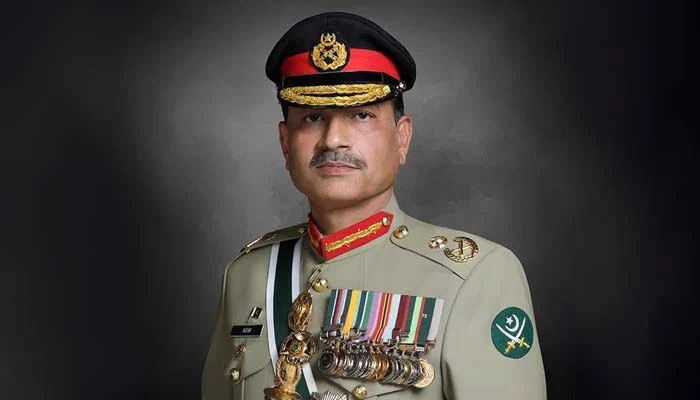
Chief of Army Staff Field Marshal Syed Asim Munir is scheduled to travel to the United States this week for his second visit in under two months. The primary purpose of the trip is to attend the retirement ceremony of US Central Command chief General Michael Kurilla, who was recently awarded the Nishan-e-Imtiaz (Military) by President Asif Ali Zardari on July 26 and has been a public advocate for Pakistan.
No official announcements have been made regarding any other engagements during Field Marshal Munir’s US visit. His last trip to the US in June included a significant one-on-one meeting with US President Donald Trump at the White House. This meeting, which also included key officials like Secretary of State Senator Marco Rubio and US Special Representative for Middle Eastern Affairs Steve Witkoff, took place against the backdrop of a recent armed conflict between Pakistan and India.
During that conflict, Washington had brokered a ceasefire after India launched attacks inside Pakistan, claiming to target terrorists responsible for the Pahalgam attack in IIOJK. In retaliation, Pakistan initiated Operation Bunyan-um-Marsoos, downing six Indian Air Force jets, including three Rafales. The 87-hour conflict resulted in the martyrdom of 40 civilians and 13 armed forces personnel in Pakistan.
The two-hour-long meeting between Field Marshal Munir and President Trump also touched on the Iran conflict. The COAS praised Trump’s “constructive and result-oriented role” in facilitating the ceasefire with India, while Trump commended Munir’s leadership during a period of complex regional dynamics. Both sides also discussed expanding cooperation in various fields, including trade, economic development, mines and minerals, artificial intelligence, energy, cryptocurrency, and emerging technologies.
Following the army chief’s visit, Pakistan and the US have since reached a long-awaited trade agreement. This breakthrough was achieved during a meeting between Finance Minister Muhammad Aurangzeb and the US Secretary of Commerce and Trade Representative. The agreement is expected to result in a reduction of tariffs on Pakistani exports to the US and marks a new beginning for economic cooperation between the two nations.
President Trump himself confirmed the trade deal on social media, stating that the two countries would “work together on developing their massive oil reserves” and were in the process of “choosing the oil company” to lead the partnership. The understanding also includes a focus on energy, minerals, information technology, and other key areas.
