

After five rounds of trade talks, Indian officials were so confident of a favorable deal with the United States that they had even briefed the media on a potential 15% tariff cap. They expected US President Donald Trump to announce the deal himself weeks before the August 1 deadline, but the announcement never came.
Instead, New Delhi is now facing a surprise imposition of a 25% tariff on Indian goods, along with unspecified penalties for its oil imports from Russia. Meanwhile, Trump has finalized larger deals with Japan and the European Union and offered more favorable terms to Pakistan.
Interviews with four Indian and two US government officials have revealed previously undisclosed details of the proposed deal and a breakdown of how the negotiations collapsed despite technical agreements on most issues. The officials on both sides believe a combination of political misjudgment, missed signals, and bitterness led to the failure of the deal between the world’s largest and fifth-largest economies, whose bilateral trade is worth over $190 billion.
The White House and Indian government ministries declined to comment.
India’s Miscalculations and Overconfidence Indian officials believed they had made significant concessions, including offering zero tariffs on industrial goods, gradually lowering tariffs on US cars and alcohol, and increasing imports of US energy and defense products. One official noted that after the fifth round of talks, most differences were resolved, and negotiators were hopeful that the US would overlook India’s reluctance on duty-free farm and dairy imports.
However, this was a miscalculation. A White House official stated that while progress was made, “there was never a deal that we felt good about. We never got to what amounted to a full deal – a deal that we were looking for.”
Indian officials now admit they became overconfident after Trump publicly spoke of a “big” imminent deal. New Delhi then hardened its stance on agriculture and dairy, two politically sensitive areas. One Indian official remarked in mid-July, “We are one of the fastest growing economies, and the US can’t ignore a market of 1.4 billion.” They later scaled back their expectations but found their concessions were still not enough. A Washington-based source familiar with the talks said, “Trump wanted a headline-grabbing announcement with broader market access, investments and large purchases.”
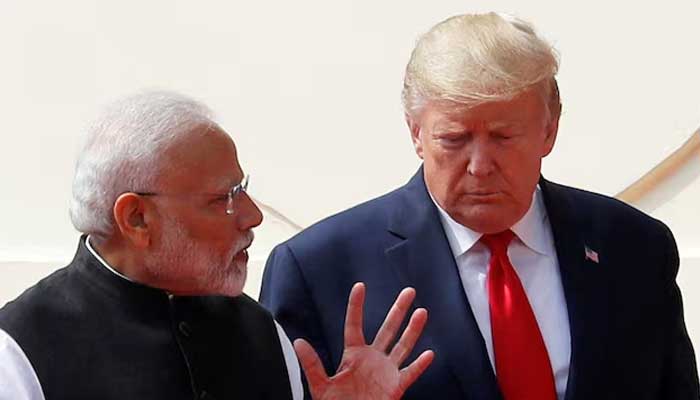
Communication Breakdown and Political Tensions Mark Linscott, a former US Trade Representative, pointed to a “missing component”: a direct line of communication between President Trump and Prime Minister Modi. An Indian official involved in the talks claimed Modi couldn’t call, fearing a one-sided conversation. Other officials added that Trump’s repeated remarks about mediating the India-Pakistan conflict further strained the negotiations, contributing to Modi’s reluctance to make a final call.
A senior Indian official attributed the collapse to poor judgment by top Indian advisers. “We lacked the diplomatic support needed after the US struck better deals with Vietnam, Indonesia, Japan and the EU,” the official said, adding, “We’re now in a crisis that could have been avoided.”
The Way Forward Talks are reportedly ongoing, with a US delegation expected in Delhi later this month. Indian officials remain hopeful that a deal can still be salvaged. The Indian government is reportedly re-examining potential concessions in the farm and dairy sectors and considering reducing Russian oil purchases in favor of US supplies if the pricing is right. Linscott believes a direct call between the two leaders may be what is needed to get the deal back on track, stating, “Right now, we are in a lose-lose. But there is real potential for a win-win trade deal.”
