

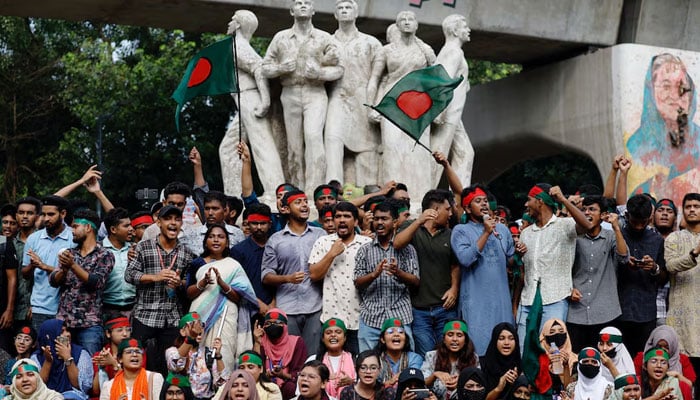
On Tuesday, Bangladesh’s interim leader marked the one-year anniversary of the overthrow of Sheikh Hasina’s autocratic regime, urging people to seize the “opportunity” for reform. Muhammad Yunus, the 85-year-old Nobel Peace Prize winner who is heading the caretaker government until elections are held, also cautioned against those he said were attempting to reverse the progress made.
“Today marks an unforgettable chapter in the history of Bangladesh,” Yunus said, celebrating a day that he claimed had “liberated our beloved nation from the grip of long-standing fascist rule.” The South Asian nation of around 170 million people has been in political turmoil since a student-led revolt ousted then-prime minister Sheikh Hasina on August 5, 2024, ending her 15-year rule.
The anniversary is a public holiday, and aside from a few political rallies, the streets of the capital, Dhaka, were quiet as many ordinary Bangladeshis took the chance to relax. Yunus is scheduled to address crowds outside parliament in the early evening, where he is set to issue a “proclamation” alongside leaders of major political parties.
Conspiracy to Undermine Progress
Hasina’s rule was marked by widespread human rights abuses, including the mass detention and extrajudicial killings of political opponents, and Yunus has committed to overhauling democratic institutions. In a letter issued for the anniversary, Yunus said, “The sacrifice of thousands has gifted us this rare opportunity for national reform, and we must protect it at any cost.” He also warned that “The fallen autocrats and their self-serving allies remain active, conspiring to derail our progress.”
However, he noted that while the interim government has made “extensive reform efforts,” a definitive agreement on measures to prevent a return to authoritarianism has been difficult to reach. Progress has been slow as political parties jockey for power ahead of elections scheduled for early 2026. “Dialogue continues with political parties and stakeholders on necessary reforms, including the political and electoral systems,” he added.
