

Japanese gaming giant Nintendo has announced it will raise the retail prices of its original Nintendo Switch consoles and select accessories starting August 3. The company attributed the change to “market conditions,” which industry analysts believe refers to renewed U.S. tariffs imposed by President Donald Trump. These tariffs have now been expanded to include imports from Vietnam, a major manufacturing base for Nintendo.
The price increase will impact the standard Nintendo Switch, the Nintendo Switch Lite, and the OLED model, which currently retail for $299.99, $199.99, and $349.99, respectively. Certain accessories, amiibo figures, and the Nintendo Sound Clock: Alarmo will also become more expensive.
During Trump’s first term, Nintendo had strategically moved a large portion of its manufacturing from China to Vietnam to avoid tariffs. However, with Trump’s new trade policy, which was announced earlier this week, tariffs have been revised on electronics and consumer goods manufactured in Vietnam, one of Asia’s fastest-growing manufacturing hubs. This has diminished Nintendo’s ability to use Vietnam as a buffer against trade tensions.
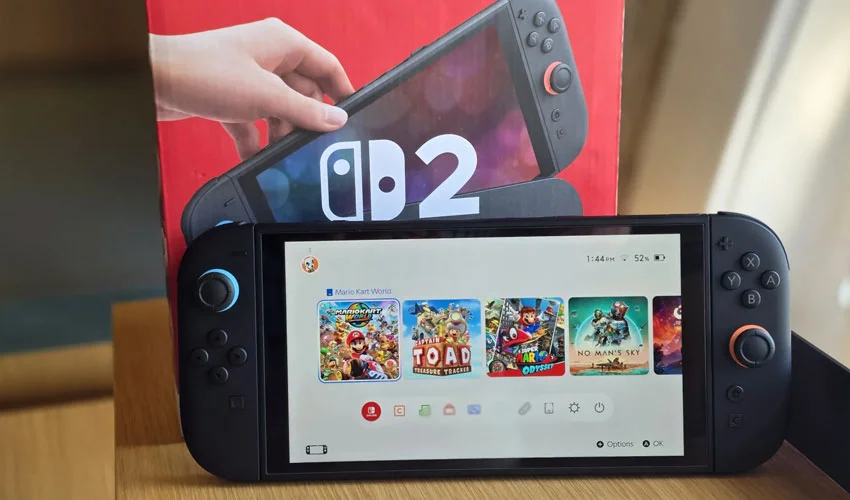
While Nintendo has not yet disclosed the new prices, the company confirmed that the price of its latest console, the Nintendo Switch 2, which was launched on June 5 at $450, will remain unchanged for now. However, Nintendo warned that future price adjustments might be necessary.
Despite the economic pressures and rising costs, Nintendo reported a strong first-quarter performance, with 5.82 million units of the Switch 2 sold in less than two months since its release. This demonstrates continued consumer demand and resilience in the gaming market.
The price changes are expected to have a ripple effect on gamers and retailers globally. For consumers, this might encourage an earlier switch to the new Switch 2, while retailers might introduce promotions to sell off older inventory. Analysts note that smaller markets, such as Pakistan, which rely on third-party imports, are also likely to see a proportional price increase due to global supply chain dependencies.
According to a Tokyo-based gaming industry analyst, Masayuki Ota, Nintendo’s decision to raise prices is “more of a necessity than a choice” given the current trade pressures and inflation. This move signals a potential shift in the company’s long-standing strategy of resisting price hikes to navigate a more volatile global trade landscape.
