

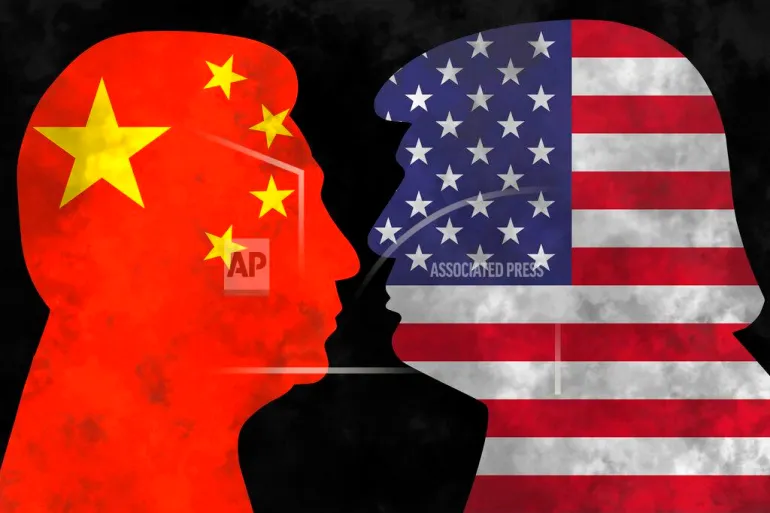
Following Donald Trump’s “Liberation Day” announcement on April 2, which introduced new tariffs that were later postponed, there have been some changes to the import levies. The new tariffs are scheduled to take effect on August 7. Approximately 40 countries will face a new 15% tariff on goods exported to the US, while other nations will see higher duties. The United Kingdom and Australia will pay 10%.
A notable omission from Trump’s latest tariff list is China, the third-largest US trading partner. This raises the question of the current state of play between the two economic giants.
US-China Trade Talks
Top officials from the US and China recently met in Stockholm, Sweden, but failed to agree on extending a 90-day pause on tariffs set to expire on August 12. According to US Treasury Secretary Scott Bessent, any decision to extend the pause will ultimately rest with President Trump. The talks, held at the Swedish Prime Minister’s office, were aimed at de-escalating a new trade dispute between the world’s two largest economies. This meeting, attended by Bessent and China’s Vice Premier He Lifeng, occurred just two days after Trump announced a new trade deal with the European Union.
This was the third meeting between the US and China since April, when an escalating trade war saw both sides impose tariffs exceeding 100% on each other’s goods. In May, they agreed to a 90-day truce, which reduced US tariffs from 145% to 30% and Chinese duties from 125% to 10%. Without a new agreement, global supply chains could face new disruption if tariffs revert to triple-digit levels, effectively creating a bilateral trade embargo.
Outcomes of the Stockholm Meeting
Following the meeting, China’s Deputy Commerce Minister Li Chenggang stated that both sides recognized the importance of a stable US-China trade relationship, describing the discussions as “candid and constructive.”
For his part, Bessent told reporters that the US was building momentum from its recent agreements with Japan and the EU. He was optimistic about the talks with China, noting they were “very constructive” but that a final agreement was not yet reached. He emphasized that “nothing is agreed until we speak with President Trump” and confirmed that he and US Trade Representative Jamieson Greer were scheduled to brief Trump on the discussions.
Bessent also mentioned that due to new US legislation on secondary tariffs for sanctioned Russian oil, China could face significant tariffs if it continues to buy Russian oil. This mirrors a similar, but unspecified, penalty announced for India, which also faces a 25% tariff on its exports.
Key Issues in the Trade Talks
The core of this week’s discussions reportedly focused on technology exports, particularly chips used for artificial intelligence. US security officials have voiced concerns that advanced American semiconductor chips could be utilized by the Chinese military. In April, Trump had planned to block the export of Nvidia’s H20 chip, but he reversed his decision after direct appeals from Nvidia CEO Jensen Huang.
Leading up to the talks, the Financial Times reported that Washington had frozen restrictions on technology sales to China to facilitate negotiations and to prevent retaliation from Beijing. This retaliation could come in the form of export restrictions on rare earth minerals, which China dominates. These minerals are crucial for various manufacturing industries, from auto parts to military hardware, and are a central point of concern for US trade representatives.
