

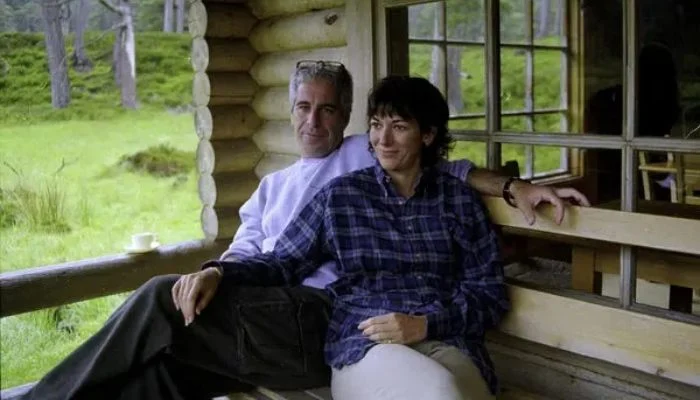
The administration of US President Donald Trump on Tuesday night urged two judges to release testimony heard by the grand juries that indicted the late financier Jeffrey Epstein and British socialite Ghislaine Maxwell on sex trafficking charges. This move comes as the president seeks to quell a growing uproar over his administration’s handling of the matter.
The Justice Department initially sought court permission on July 18 to make public transcripts of the confidential testimony given by witnesses years ago in both cases. However, Manhattan-based US District Judges Richard Berman and Paul Engelmayer requested the government to provide more detailed legal justifications for these requests. In a pair of court filings submitted just before midnight, prosecutors argued that unsealing the materials would be appropriate given the “abundant public interest” in the Epstein case and the persistent scrutiny of how federal law enforcement handled it.
Epstein Case Conspiracy Theories and Recent Developments
The Epstein case has been at the center of conspiracy theories for years. In recent months, Trump has faced pressure to make public documents from the federal investigations into Epstein and Maxwell. Epstein died by suicide in jail in 2019, an autopsy concluded, while awaiting trial on sex trafficking charges brought by federal prosecutors. He had pleaded not guilty. Maxwell, Epstein’s longtime girlfriend and alleged accomplice, was convicted in 2021 on sex trafficking charges and is currently serving a 20-year prison sentence in Florida. Maxwell had pleaded not guilty and is now appealing her conviction to the US Supreme Court.
This month, Trump stated that he had asked Attorney General Pam Bondi to seek the release of grand jury transcripts in the two cases. The president’s directive followed the Justice Department’s announcement that it concluded Epstein died by suicide and that there was no incriminating list of his clients. This announcement by the Justice Department angered some of Trump’s conservative supporters, who believe the government is covering up Epstein’s ties to the rich and powerful and that the financier was murdered in jail.
Nature of Grand Jury Proceedings and Transparency Challenges
Grand juries are convened by prosecutors and meet in secret to hear witness testimony and decide whether to indict individuals suspected of crimes. Records of their proceedings typically remain sealed, with disclosures permitted only under limited circumstances.
Even if one or both of the judges allow the transcripts to be made public, it remains unclear whether the public would learn anything new or particularly noteworthy. Maxwell’s four-week trial in 2021 included public testimony from alleged sex trafficking victims, associates of Epstein and Maxwell, and law enforcement officers. Furthermore, the transcripts would not represent all previously unreleased material in the government’s possession. Investigators and prosecutors may pursue leads they cannot substantiate or interview potential witnesses whom they do not ultimately call to testify before a grand jury.
On July 23, US District Judge Robin Rosenberg in Florida denied the administration’s request to unseal records from grand jury investigations in 2005 and 2007 in that state concerning Epstein. The judge ruled that the request did not fall within any of the limited exceptions that would permit the release of such material. Epstein pleaded guilty in 2008 to a prostitution charge brought under Florida law and was given a 13-month sentence as part of a plea deal that is now widely regarded as too lenient.
Deputy US Attorney General Todd Blanche, Trump’s former personal lawyer, met with Maxwell for two days last week to ascertain if she possessed any information about others who had committed crimes. Maxwell’s lawyer, David Markus, and Blanche have not yet provided detailed accounts of their discussions.
