

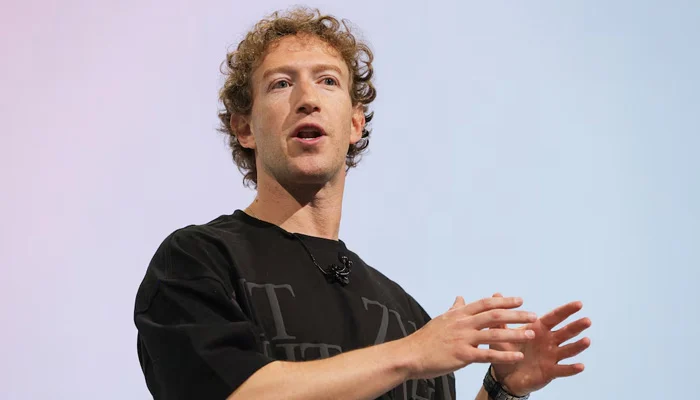
Mark Zuckerberg, along with current and former directors and officers of Meta Platforms, reached an agreement on Thursday to settle claims seeking $8 billion for damages they allegedly caused the company by allowing repeated violations of Facebook users’ privacy. A lawyer representing the shareholders informed a Delaware judge of the settlement on Thursday.
The involved parties did not disclose the specific details of the settlement, and defense lawyers did not address Judge Kathaleen McCormick of the Delaware Court of Chancery. Judge McCormick adjourned the trial just as it was about to enter its second day, and she congratulated the parties on the resolution.
Sam Closic, the plaintiffs’ lawyer, stated that the agreement came together rapidly.
Billionaire venture capitalist Marc Andreessen, a defendant in the trial and a Meta director, had been scheduled to testify on Thursday.
Meta shareholders had sued Zuckerberg, Andreessen, and other former company officials, including former Chief Operating Officer Sheryl Sandberg, in an effort to hold them personally liable for billions of dollars in fines and legal costs the company incurred in recent years.
Susan Desmond-Hellmann, a former Meta board member testifying in the trial, was seen entering the Leonard L. Williams Justice Center in Wilmington, Delaware, on July 17, 2025. Mark Zuckerberg and other top Meta Platforms officials were expected to take the stand there to defend against allegations by investors that they should be held accountable for billions in fines for Facebook’s privacy violations. — Reuters
The Federal Trade Commission (FTC) had fined Facebook $5 billion in 2019 after determining that the company failed to comply with a 2012 agreement with the regulator to safeguard users’ data.
The shareholders’ objective was for the 11 defendants to use their personal wealth to reimburse the company. The defendants, however, denied the allegations, characterizing them as “extreme claims.”
Facebook changed its name to Meta in 2021. The company itself was not named as a defendant in the lawsuit.
Meta declined to comment on the settlement. A lawyer for the defendants did not immediately respond to a request for comment.
Jason Kint, the head of Digital Content Next, a trade group for content providers, remarked, “This settlement may bring relief to the parties involved, but it’s a missed opportunity for public accountability.”
Zuckerberg had been slated to testify on Monday and Sandberg on Wednesday. The trial was originally scheduled to run through the end of next week.
The case was also expected to include testimony from former Facebook board members Peter Thiel, co-founder of Palantir Technologies, and Reed Hastings, co-founder of Netflix.
Meta investors alleged in the lawsuit that former and current board members utterly failed to oversee the company’s compliance with the 2012 FTC agreement. They further claimed that Zuckerberg and Sandberg knowingly operated Facebook as an illegal data harvesting operation.
The lawsuit followed revelations that data from millions of Facebook users was accessed by Cambridge Analytica, a now-defunct political consulting firm that worked for Donald Trump’s successful 2016 U.S. presidential campaign. These revelations directly led to the FTC fine, which was a record at the time.
On Wednesday, an expert witness for the plaintiffs testified about what he described as “gaps and weaknesses” in Facebook’s privacy policies. However, he did not explicitly state whether the company violated the 2012 agreement Facebook had reached with the FTC.
Jeffrey Zients, a former board member, testified on Wednesday that the company did not agree to the FTC fine to spare Zuckerberg legal liability, as the shareholders had alleged.
On its website, Meta has stated that it has invested billions of dollars into protecting user privacy since 2019.
This trial would have presented a rare opportunity for Meta investors to witness Zuckerberg answer probing questions under oath.
In 2017, Zuckerberg was also expected to testify in a trial involving a lawsuit by company investors who opposed his plan to issue a special class of Facebook stock that would have extended his control over the company. That case also settled before he took the stand.
“Facebook has successfully remade the ‘Cambridge Analytica’ scandal about a few bad actors rather than an unraveling of its entire business model of surveillance capitalism and the reciprocal, unbridled sharing of personal data,” Kint commented. “That reckoning is now left unresolved.”
