

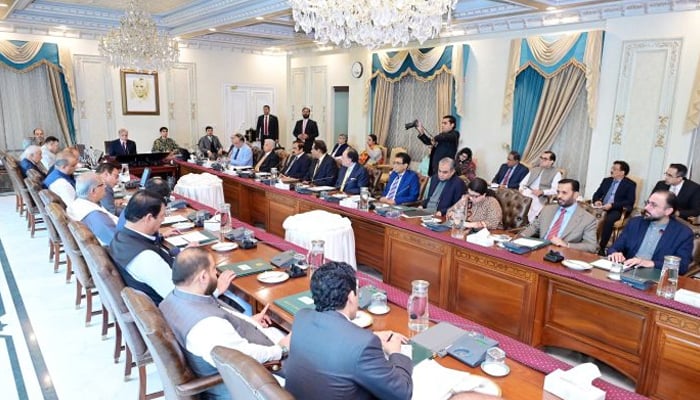
The federal cabinet on Wednesday approved a 15% increase in pensions provided by the Employees’ Old-Age Benefits Institution (EOBI), effective from January 1, 2025. This decision, based on the recommendation of the Ministry of Overseas Pakistanis and Human Resource Development, will be funded from the institution’s own resources.
During a federal cabinet meeting chaired by Prime Minister Shehbaz Sharif, the premier directed the formation of a cabinet committee to introduce institutional reforms within EOBI. This committee will also deliberate on proposals to extend old-age benefits to the informal labor sector, including domestic workers, agricultural laborers, and other marginalized employment categories previously overlooked. These reforms aim to ensure that workers in these neglected sectors receive their due rights.
Import Exemptions and Legal Procedures
The cabinet also approved the initiation of necessary legal procedures concerning the draft of the Sea Carriage Shipping Documents Bill, 2025, following a recommendation from the Ministry of Maritime Affairs.
Furthermore, based on the Ministry of National Health Services’ recommendation, the cabinet approved a five-year extension of the exemption on the import of anti-cancer, cardiac, and other life-saving drugs used in hospitals and related healthcare institutions. These medicines are considered vital for saving human lives, and the exemption is intended to ensure their prompt availability. It was stipulated that these drugs will only be available in hospitals and authorized institutions, with a ban on open market sales. Prior approval from the relevant licensing authority will be required for their import.
The federal cabinet also endorsed decisions made in the meetings of the Cabinet Committee on Legislative Cases held on July 2, 2025, and July 3, 2025.
Commendation for Muharram Arrangements and Disaster Preparedness
Earlier in the meeting, Prime Minister Shehbaz Sharif commended the efforts of all provincial governments, the federal administration, as well as authorities in Azad Jammu and Kashmir (AJK) and Gilgit-Baltistan (GB) for making the best possible arrangements during Muharram. He also expressed gratitude to law enforcement agencies and all stakeholders for maintaining law and order during the religious observances.
The prime minister also addressed disaster preparedness amid the ongoing monsoon season, stating that he had chaired a high-level meeting with the National Disaster Management Authority (NDMA) and Provincial Disaster Management Authorities (PDMAs) to ensure optimal arrangements. He praised NDMA’s efforts in preparing for heavy rains across different parts of the country.
He expressed sorrow over the loss of lives due to heavy rainfall in various parts of the country, specifically the tragic incident in Swat. He described it as an unfortunate event and emphasized the crucial need to learn lessons from it and implement measures to prevent similar tragedies in the future.
Satisfaction with Economic Performance and Ministerial Accountability
On the economic front, Prime Minister Shehbaz expressed satisfaction over recent positive trends in macroeconomic indicators. He reiterated his government’s strong focus on performance and service delivery, announcing that the performance of ministries would be evaluated every two months.
“This message I want to make loud and clear—it is all about delivery and service to the nation,” the prime minister stressed. He added that ministries performing well will be acknowledged and appreciated, while those falling short will be held accountable and asked to explain their performance.
During the meeting, he also commended Federal Minister for Planning Ahsan Iqbal for his ministry’s effective utilization of development funds, noting that development spending had reached over Rs1 trillion under the Public Sector Development Programme (PSDP).
