

On Monday, US President Donald Trump announced the provision of new weaponry for Ukraine and issued a stark warning: he would impose sanctions on buyers of Russian exports unless Russia agrees to a peace deal within 50 days. This marks a significant policy shift, reportedly driven by frustration with Moscow.
Seated alongside NATO Secretary General Mark Rutte in the Oval Office, Trump informed reporters of his disappointment with Russian President Vladimir Putin. He stated that billions of dollars worth of weapons would be supplied to Ukraine.
“We’re going to make top-of-the-line weapons, and they’ll be sent to NATO,” Trump declared, adding that Washington’s NATO allies would bear the cost of these armaments.
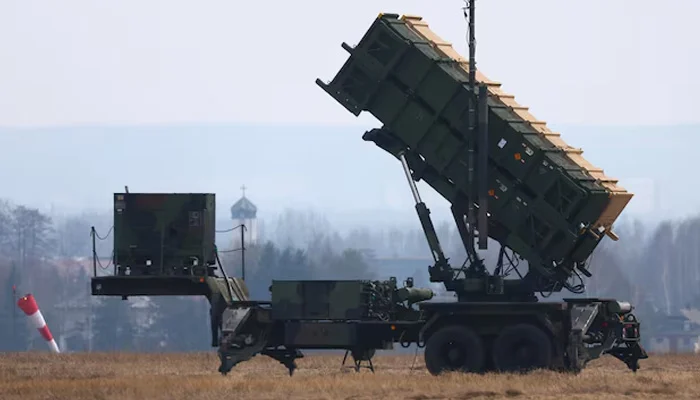
The weapons package will include Patriot air defense missiles, which Ukraine has urgently requested to safeguard its cities from ongoing Russian airstrikes.
“It’s a full complement with the batteries,” Trump explained. “We’re going to have some come very soon, within days… a couple of the countries that have Patriots are going to swap over and will replace the Patriots with the ones they have.” He indicated that some or all of the 17 Patriot batteries currently on order by other nations could be dispatched to Ukraine “very quickly.”
Trump’s threat to implement so-called secondary sanctions on Russia, if executed, would represent a substantial departure in Western sanctions policy.
Lawmakers from both major political parties in the United States are actively pushing for legislation that would authorize such measures, specifically targeting other countries that purchase Russian oil.
Throughout the more than three-year-old conflict, Western countries have largely severed their own financial ties with Moscow. However, they have refrained from taking steps that would prevent Russia from selling its oil to other markets. This policy has enabled Moscow to continue generating hundreds of billions of dollars from oil shipments to major buyers like China and India.
“We’re going to be doing secondary tariffs,” Trump stated. “If we don’t have a deal in 50 days, it’s very simple, and they’ll be at 100%.” A White House official clarified that Trump was referring to 100% tariffs on Russian goods, in addition to secondary sanctions on other countries that import its exports.
Grace Period and Diplomatic Maneuvers
Despite the severity of the threat, Trump’s announcement of a 50-day grace period was met with a degree of relief by investors in Russia, leading to a recovery in the ruble from earlier losses and a rise in stock markets.
Artyom Nikolayev, an analyst from the financial information firm Invest Era, commented, “Trump performed below market expectations. He gave 50 days during which the Russian leadership can come up with something and extend the negotiation track. Moreover, Trump likes to postpone and extend such deadlines.”
Trump, who returned to power this year on a pledge to swiftly end the conflict, asserted that his policy shift was driven by increasing frustration with Putin, whom he claimed had discussed peace while simultaneously continuing to strike Ukrainian cities.
“We actually had probably four times a deal. And then the deal wouldn’t happen because bombs would be thrown out that night and you’d say we’re not making any deals,” Trump recounted.
Since re-entering the White House, Trump has sought a rapprochement with Moscow, engaging in several conversations with Putin.
His administration has moved away from overtly pro-Ukrainian policies, such as advocating for Kyiv’s NATO membership and demanding Russia’s withdrawal from all Ukrainian territory.
However, Putin has thus far not accepted Trump’s proposal for an unconditional ceasefire, despite its quick endorsement by Kyiv. Recent days have witnessed Russia employing hundreds of drones in attacks on Ukrainian cities.
Trump publicly voiced his frustration last week, remarking: “We get a lot of bullshit thrown at us by Putin.”
Earlier on Monday, Ukrainian President Volodymyr Zelenskiy held discussions with Trump’s envoy, Keith Kellogg.
Zelenskiy stated that they had addressed “the path to peace and what we can practically do together to bring it closer,” including “strengthening Ukraine’s air defence, joint production and procurement of defence weapons in collaboration with Europe.”
An air-raid alert was declared in Kyiv shortly after Zelenskiy’s talks with Kellogg concluded.
Separately on Monday, Zelenskiy announced his intention to replace his long-serving Prime Minister Denys Shmyhal with Shmyhal’s first deputy, Yulia Svyrydenko, as part of “a transformation of the executive branch.” Her appointment will require parliamentary approval.
Svyrydenko, 39, is an economist who has previously served as minister of economic development and trade and as deputy head of Zelenskiy’s office. She played a pivotal role in negotiations between Kyiv and Washington concerning a minerals deal.
Russia, which initiated its full-scale invasion in February 2022, currently occupies approximately one-fifth of Ukraine. Its forces are making slow advances in eastern Ukraine, and Moscow shows no indication of abandoning its primary war objectives.
